
Hadith Vs Fiqh | Mufti Abu Layth
fiqah jurisprudence fikh hadeeth ahadith ahaadeeth hadis hadees ahaadith saheeh sahih hadith saheeh hadith sound hadith authentic malik ibn anas malik bin anas imam maalik imam malik ibn anas imaam imams prayer leader muftis sunna sunnat sunan prophetic practice muhaddith muhaddithun muhadith muhaddithin muhaddithoon madinah madina al-madinah madeenah yathrib 'alim aalim ulama ulema ulamaavideo · 14:09 · 13,000 views · 17 Nov 2022 · Open on YouTube
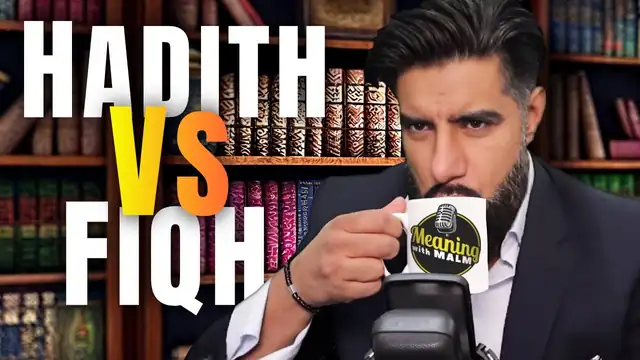 Press play to load from YouTube. Nothing loads until you do.
Transcript
machineauto-transcribed, may contain errors · source: youtube auto · click a time to seek · dotted terms open the glossaryit's important to understand that in the Islamic tradition we also have a lot of nomenclature a lot of terminology that has competed with one another and some have preponderated and they've dominated the scene okay so let's take as an example Hadith as a science it is a culture okay so the mahati thorn were a competing culture against the so the people of fit were of a different
competing culture they had different terminologies and they had a different landscape and and there was a culture War and to be fair for the most part probably the whakaha won it throughout the Muslim history because most scholars in Islam are Scholars of the majority of Scholars throughout all of Muslim history one may argue probably 80 percent of all Muslim scholarship was Scholars of FEC and one simple explanation you know to
be reductive maybe simply because that's where the money was because if you became a faki you had a career path so you could train to become there were many jobs you could do so you could train to um become like an assisting magistrate you could become like a paralegal that helped the magistrate come up with law you could become the magistrate which himself which was the cardi you could become a regional kind of called the you could become a provincial cardi higher up and you had all these are these which
were judges and the judges were yeah because that was the route and what you could also do is write books on ferc and the books would sell because there was a market for film because it was a practical science it was an applied it was law so there was a route to take if you studied let's say language like Arabic and you're a grammarian you could teach people Arabic now Arabic was the lingua Franca so there would always be need for people to learn Arabic just as today there's always a need to learn English so if you're an English teacher you're not you know there's plenty of work
sure you can create your own little books and you can do that but if you were a Hadith scholar now that was an Eclectic a very rare Niche profession it was important but it wasn't it wasn't lucrative it wasn't necessarily it could be maybe you wrote a book that made you a lot of money and you usually people in the past would get a they would find an endowment they would be kind of given a walk that they would find a patron that would uh patronize them in in in that's patronize
in that sense that to to give them money to as a like a scholarship I don't know scholarship's the right word but they're basically a walk an endowment they would say that look you study on this I've got like some wealthy people in the past they had all these fields they would say you know what this field is dedicated for people who are studying Islam so they can live off the money that is made in this thing and people would live like that and people sometimes themselves they would be gifted endowments for their entire lives lifetime so they could live off the entire produce and the money that is made from that produce of these lands
and that gave that freed them up to do their creative research so this is how it used to work in the past by the way the walk system so now Hadith it was very important very popular I mean it was important but not as popular as fake but in the last few centuries Hadith has really preponderated and to some extent you know In Our Lifetime as well it's dominated the Hadith nomenclature has so words like see it's interesting because these are
Arabic words and sahih means something correct and life means something weak so but sahih does not mean something correct linguistically so that that's important to understand life doesn't weak does not mean something weak linguist necessarily linguistically in that in that sense so sahih especially what sahib means is the chain of transmission is connected and has been authenticated
it does not mean because the Arabic word sahih translates as correct in this context it is not being used as the normal Arabic word it has been used as a professional word okay so just as today if I said oh write this uh I don't know write this bold or in italics or write this Times New Roman like this even though these are English words they mean something that you're understanding oh I'm talking about a
particular font I don't just mean write this bold it about even though bold could mean something else in in just English or times I don't know what times the enrollment would mean but let's say you you understood something that's not what it means it's a it's nomenclature it is legal speak or in this case it is um it is Hadith speak it is not your standard Arabic they're using it as terminology as nomenclature not to mean the normal Arabic word
which means something is correct now that's important because you see in their world a chain being correct connected or not connected does not necessitate whether that Hadith is acceptable or not necessarily so according to the thick world a Hadith being accepted could be down to the fairy practice of that of that region Al Medina they say well this is the Sunnah it came down to us through the living tradition
this is accepted we don't care if there's a chain for it or not so these are Divergent Worlds the cultures competing cultures diverse views on one hand you have the Mahadev theme who their world is centered on Philip oh sorry on Hadith and they use words which are Arabic Words which have a normal meaning as well like something is correct sahih but they're using it to mean that the chain is connected you should not translate that so if the
chain is not connected they will call it Thai for weak it does not mean the content is necessarily weak it just means that this chain according to them did not meet the criteria according to the in their world chain may not even be that important so Imam Malik to him chain wasn't that important sometimes he'd miss chunks of the chain you'd say well this has come to us through the living tradition
so regardless he was one of the greatest of of all Islamic history put together so regardless of the later mahadithin crystallizing these terms in nomenclature when they use words like something as sahih if something is life you must keep in mind that this is speaking about terminology it's not the linguistic meaning okay so they are not speaking about something being actually correct
not according to the vast majority of the scholars necessarily anyway just because it's an Arabic word okay so they simply mean that the chain is not connected so yes according to that culture that may be invalid because that culture deems everything to be chain Centric so if the chain is incomplete it's life it's weak weak what life is not okay the chain is weak
it's important to remember that according to many of the sure they don't disregard the chain but it doesn't hold the same importance to these people to these people it's like well okay it's good it doesn't hold as much it's like saying look like let me give you an example art to many people let's say people on this art may not hold primary importance in their life it doesn't mean they disregard art or they hate art or they think art is
stupid it doesn't mean that they recognize art is very valuable it's contributed to human uh culture it's it's fine it's monetary it has great monetary value you know it can be worth millions and millions and it's they they appreciate there's some appreciation some people may appreciate it more than others but there's some appreciate people don't disregard or abhor art but it's not their world to them it's like well my world gets on fine without art so I don't disregard it but it definitely doesn't take the primary or secondary you know ranking in my life
but to some people that are art collectors and that aren't uh you know connoisses and that are art uh curators to these people their whole world hinges on art as in I mean this may be a poor approximation but I could have used anything to just give you the idea but similarly is not it's like that it's a concept which sure everybody can appreciate it these people they will revolve around it that group of Scholars not so much you know that sure they recognize it
yeah it's it's good but it doesn't get first or second ranking at all and the Arabic words that are used definitely don't translate to The Standard Arabic meaning so just because they declare something doesn't mean it's linguistically correct according to this group of people so right right so and the same thing I hope that may if they declare something weak it doesn't mean that the whole debate for these people or sorry the whole effort the project is
to do with the chain and to these people it's more about the living tradition and the applied Islam so if the chains so basically that is subservient to this and to these people sure that had so in recent years because of the rise of Renaissance in Hadith studies that we found especially in the last century one to two century and especially the last century and the rise of the salafiat darawa so and I'm not saying that's a bad thing that's actually a good thing that it brought Hadith once again to the Forefront
but people should not in that moment confounding moment you know lose themselves to think that these words translate asahih in Islam no it does not mean that Hadith or what this Hadith is saying is in Islam or life in Islam No it is sahih IL is not in its chained in its chain and this is one of the primary things
that the the that that the two madhubs primarily the the malikima the school of Medina and the school of kufa Imam they sought to make clear and separate diverge themselves from the other you know way of thinking that the more kind of um everything is about a Hadith as opposed to the Sunnah so splitting these two I think it's um it's definitely something that uh is is under stressed so I want to share that with you guys I hope it's of
some help
Something wrong here?
Tell us what is wrong and it will be checked against the recording. Nothing changes until a person has reviewed it.
Sending a note needs JavaScript, which is off or unavailable in this browser. Nothing has been sent.
No name, email address or account is asked for or stored, and the inbox does not store your IP address. For rate limiting it keeps an unreadable fingerprint of your connection for 48 hours, and our database provider's own logs record connections as every website's do. Only your note, its kind, the page and the moment in the recording are kept, for review.
Cite this recording
Stable id, transcript version and tier are part of the citation. Every change to a transcript is logged.Mufti Abu Layth Archive, auto-transcribed, may contain errors. https://muftiabulayth.org/r/4a4sk9jbdaq/ (accessed 1 November 2026)
- APA 7
Mufti Abu Layth. (2022, November 17). Hadith Vs Fiqh | Mufti Abu Layth [Video, auto-transcribed, may contain errors]. Mufti Abu Layth Archive. Retrieved November 1, 2026, from https://muftiabulayth.org/r/4a4sk9jbdaq/
- Chicago author-date
Mufti Abu Layth. 2022. "Hadith Vs Fiqh | Mufti Abu Layth." Video, auto-transcribed, may contain errors. Mufti Abu Layth Archive. Recorded November 17, 2022. Accessed November 1, 2026. https://muftiabulayth.org/r/4a4sk9jbdaq/
- BibTeX
@misc{abulayth-4a4SK9JBDaQ,
  author = {Mufti Abu Layth},
  title = {{Hadith Vs Fiqh | Mufti Abu Layth}},
  year = {2022},
  month = {11},
  date = {2022-11-17},
  howpublished = {\url{https://muftiabulayth.org/r/4a4sk9jbdaq/}},
  url = {https://muftiabulayth.org/r/4a4sk9jbdaq/},
  organization = {Mufti Abu Layth Archive},
  urldate = {2026-11-01},
  note = {Auto-transcribed, may contain errors}
}