
Theists Vs Anti-Theists, Is Morality Independent Of God? | Mufti Abu Layth
hadeeth ahadith ahaadeeth hadis hadees ahaadith al-bukhari imam bukhari sahih al-bukhari sahih bukhari saheeh al-bukhari saheeh bukhari imam al-bukhari imaam imams prayer leader shari'ah shariat sharee'ah maaliki malikite malikiyyah maliki school fatwah fatawa fatwaa fataawa legal opinion muftis hukm ahkam hukum hukam ahkaam haraam forbidden koran quraan al-quran 'alim aalim ulema ulamaa shaykh shaikh sheik shuyukh shaykhs nikah nikkah nikaah nikah nama nikahnama talaq talaaq triple talaq talak subhan allah subhaanallah subhanallaah salam as-salamu alaykum assalamualaikum salaams salam alaykum wa alaykum as-salam peace greeting deen al-din ad-deen ad-dinvideo · 30:12 · 2,500 views · 12 Mar 2023 · Open on YouTube
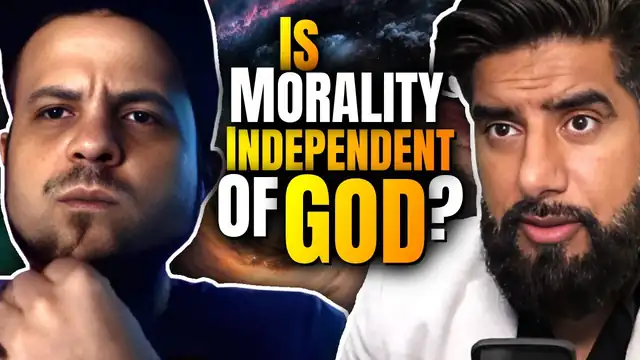 Press play to load from YouTube. Nothing loads until you do.
Transcript
machineauto-transcribed, may contain errors · source: youtube auto · click a time to seek · dotted terms open the glossarycome on how you doing man assalamu alaikum salaam I'm good I'm good it's just I I was wrapping this up but I thought I've almost done five hours but I saw Mark sitting there I thought yeah it's better
first of all just like our hair for you know all your time you're giving tonight I feel real bad now because no the question it's an honor to I feel that energy coming right through the the screen it's amazing you know I think we underestimate even like we think certain things are virtual but somehow we still share a I don't whether it's a vibration frequency and energy or whatever it is however it is we still do it a lot of on a side note if people check Dr Rupert sheldrake's
studies on what is size CSI which is uh inexplicable causality in Psychology where there isn't a direct link and this and he's done many studies on being able to feel when you're being able knowing when you're being watched yeah so we can tell usually when somebody's looking at us but they found the studies to be equally true above probability when somebody was watching through a screen watching someone they could still feel eyes on them like so let's say
um whether somebody was being watched through a camera um and they they were somewhere else so there wasn't actually any spatial even if you were in the headquarters watching security seeing a lot of CCTV from a different place as a security team people could sometimes tell they would they could tell above probability they were being watched but yeah coming back to sorry I digress yeah no this is part of my this is part of the problem I digress too often and that's why I'm worried because the the topic was kind of philosophical so I didn't know if it was going to go to
rabbit hole and but subhanallah I'll try to get to hit the track role we we uh generally we live for the rabbit holes we also be talking about this stuff for this ungodly hour so basically um what I wanted to talk about is um right now especially in the west there's kind of been a rise of uh Christian nationalism and especially it's kind of like over really hit its boiling point with overturning a Rover Suede and kind of like this impression of uh religion
kind of posing on people so it's kind of reflaming these um conversations between antitheists and theists and um because that that kind of argument had kind of died down for a little bit because it is kind of played out because you know anti-theists don't like really kind of engaging with these because it's about the metaphysical and it's hard to kind of like argue about the metaphysical we're kind of like pulling things that we don't have any way to observe so kind of doesn't really serve a point but um I came across a debate recently of an anti-theist and a theist and
it was it went pretty bad for the theist as far as yeah as far as trying to articulate because it seemed like the the anti-theist was really pinning him on the point of of God or more morality being independent of God and uh because he was this guy who was actually coming from a a Pagan religion trying to argue with from that kind of aspect so his his religion had more kind of obvious holes in it and stuff that you could easily point out and say like yeah Thunder's not from Zeus being mad at you or these type of things um so it was easier kind of like to
deconstruct because and he was trying to combat that what I think he was trying to do is the the trajectory hermeneutics which I was which you've talked about in the past and kind of really appeals to me as far as like kind of addressing uh modern issues but what I wanted to ask you is um and you know since he wasn't really able to defend the theistic position as small as I said probably you can um through trajectory harmonutics would that if you were to follow that and I guess like even chicks like uh Sheikh Abdullah and others who kind of like say we needed to update the hadoot and stuff
um does that put you in the camp of believe in that morality exists uh without God right so I so how so here's how we'd frame this it's not about people who believe in God would not say that it exists independent of God in the sense that nothing can exist in sheer independence of God because people who believe in God believe that God brought about everything so whether he set about certain um certain forces into play for things to
to manifest and come about and set things into motion but things only exist by God so so so nothing would be so in that sense just to begin that the statement would be a misplaced statement to say independence yeah I wouldn't mean to frame it that way yeah I wouldn't mean to frame it that way because it's like for micros yeah no I can't I get it I can't exist without God so I get I guess but on their perspective I was just I was just correcting it because it's I felt it's an important one to you know it's uh all right let's just start tapped this
so I felt it's an important thing to clarify secondly now has the question that is being posed here is uh just to be clear is is morality um learned through scripture or is it something that yeah like innately no yeah the way I said it yeah the way I was saying is kind of the way that they would frame it but I guess that we would the basic question would be going back to that is something good because God likes it or is it something's good right so this is called the Divine commandment
theory in philosophy and in Islam we just like in many in many philosophical traditions there's a disagreement amongst yousulin so certain Scholars felt amongst them Imam as well that look there is already what they they framed it in the old usually debate as atasin
so do we see certain things as good and do we see certain things as bad and then has Islam come and codified that for us or did it tell us don't do this therefore we just declare it bad otherwise there is no good and bad in this world so the Muslim scholarship disagreed on this from the very get-go as soon as this became a debate in the very early time like within a century after the prophet uh just over a century after the Prophet this is how Scholars were divided what I would uh where I find myself on this debate
is yes of course I agree with these people that um that human beings and it's not just human beings uh but let's beginning our discussion with human beings that we have some innate sense of right and wrong that we already have this so the way I um this is me personally would frame it is that we have a morality kind of instinct or a morality Compass it's as as it were akin to the language instinct so we have this Universal grammar that
is embedded in us when it comes to language but what language we learn and how we learn it is shaped by the environment that we find ourselves in so if you were born in China you would speak Chinese if you're born in America you speak English now it's not that it's not to do with your your your kind of uh it's it's your you are hardwired to pick up language wherever you are so this is why people who are uh even those people who'd have been born deaf dumb and blind in the sense they're completely cut off
from the world in picking up those Sensations or language in any whether it's visually auditorily or through speech yet when they do learn how to express themselves they fully pick up language uh Helen Keller a brilliant author was born deaf dumb and blind and so and she authored magnificent books so the thing is that language it's it's within us regardless of which one you end up picking up so now and all languages will have some Crossovers and similarities and language with the day and age will also change
so similarly now you shifted over morality we have this kind of a base a compass if you like a base structure which is hardwired in our brain then what happens is we like so we have the ability and this is with animals too uh obviously varies where you go in the scale whether it's going to be primates right down through mammals or going to others obviously at reptile level you wouldn't really find it at all in that way but you will find it with mammals and definitely in primates that you find you see would they identify hurt like we
can so this is coming back to us two key things we recognize pain through empathy and and through empathy we want we have this feat because of our feeling of empathy so we understand pain in ourselves and through empathy we can see in others and we want to avert it like prevented or mitigated so this is a very base level to start from being able to identify pain and being able to or be through empathy you want to avert it for
the other because somebody said why do you want to avert it for the other because when you see them in pain our ability to empathize makes us feel pain because humans and even monkeys they have this thing in our brain which is actually called monkey see monkey do you know the monkey see monkey do feature like we mirror things even a baby they they so newborn babies as well or relatively newborn they'll do things like they'll make faces at them or they'll stick their tongue out and the baby will stick the tongue out so they mirror what they're seeing and it's just called the monkey do monkey
see monkey do brain because you mirror this now part of us I'm not saying the same side but that's just to give you an idea that because of our ability to empathize whether we like it or not we when we see pain we feel pain so it also hurts us that the other person is hurting so we want to avert it we want to prevent it because in a way we want to prevent ourselves from being hurt by watching them being heard so this very simple building block Foundation is enough to build morality because it will then grow
and so what happens is so we have very Basic Instincts with us and we through societal constructs we kind of interject other understandings now I also do feel that there is a collective Consciousness which does result in an ongoing gradual tiny maybe it's minuscule biofeedback of or an ethical kind of like a feedback between our Consciousness and the collective Consciousness through our lives and this is why whole and this happens with the Zeitgeist it's like that at a society level at a
civilizational level so hence you see right now let's say for example let's in in the West it will be generally people will identify racism as wrong they will see it as and I'm not saying it doesn't exist but people for the most part will feel in their gut that this is a wrong and bad thing whereas let's say you went back 30 years 40 years they were it wasn't necessarily evident like sure maybe they thought okay maybe some people thought okay you shouldn't do it but it wasn't that evident to them and now it's very evident like they feel it in their gut that this is actually no
this is a bad thing and that's I would say that the Zeitgeist has changed the collective kind of conscious feedback they've that the consciousness of people has evolved the if the ethics has has kind of digested that and so yeah so that's how I a kind of loose structure of how I see things so coming back to scripture does not scripture works on the assumption that we already understand what right we already have an understanding of morality so when the Quran tells you that look Islam has come to forbid you from uh from muharramat from
bad things uh disgusting things it's come to tell you that they are Haram it's using that because it understands that the Arabs understand disgusting things otherwise it wouldn't make any sense because if you didn't understand what disgusting is and I say well this is big so when the Quran says don't do this this is this is a disgusting thing obscene thing it's going by the assumption that human beings understand what disgusting means so so the Quran has come to it's not so to me sure some people might take the other philosophical tradition in saying human beings have no understanding of
right and wrong we only pick it up because the Quran so for example if I'd never been told in Islam to murder is wrong I would never have known to murder a song some people can hold that I don't hold that most many Muslims Imam or any other people didn't hold that for you they said that look human beings already knew this but the Quran came to on certain things it didn't come for so the rules of akam in the Quran are very few some said they were between you know 130 or something to about 500 that's it out of 6 600 verses or 6 200 verses sorry right so that's a very small percentage or
about akam it's not that the Arabs didn't know murdering was wrong but it's just that they were justifying it by certain means they were saying look we know it's wrong but here it's okay because of this tribal reason so the Quran came to say look stop justifying it with your silly means okay murder is murder you know whoever kills one person is has always killed the whole of mankind in the eyes of God so these were the things it's not that the Arabs didn't know stealing was wrong every All Humans know stealing is wrong because they know it doesn't belong to you so you're taking something that doesn't belong to you so Islam in that sense the
the morality has not changed it's not that the morality has changed people are simply asking do the punishments change so that's a separate question so for example if the punishment for doing something to a slave was this or if the punishment was if some Nation committed war against you you could now turn them into slaves this was the punishment but the day and age has changed and today nobody accepts slavery so today this will not be the punishment
that you can turn them into slaves and Islam would mandate that you live in the day and age this is how obviously all these ulama from the especially the Maliki mother and other methods that see trajectory hermeneutics would rule this maybe that there are maybe Muslims that would say no maybe even today you can do slavery then and I would obviously disagree with them but maybe there are people I think did did what's his name did Dr Jonathan Brown say things like that I think in a discussion maybe I uh but there's been certain people who've said well or I think Daniel hakikachu definitely did argue
that sure slavery today is wrong and if I misconstrue this then I apologize but from what I recall that they argued that sure we see as wrong but what if the day and age changed to where it's okay then in Islam it's okay to do it and so and I obviously would I would not agree with that view I would agree that once it's Humanity has changed and does not see that as a punishment then it's not a Islam would also agree because Islam is here the Islam did not come about slavery it's not about slavery this was just it just it was already in existence before Islam came Islam just said well
it was already there so it just gave some rules about it and it people did used to do that when they went to war they would enslave the other people if they lost the war and so that was not just Muslims that was all figments of these of humans societies throughout the globe so Islam was also a part of them so it just played it just did the same thing now when Humanity changed and even before as the Zeitgeist started to change so I don't just mean the United Nations I mean the Zeitgeist started to change the collective Consciousness
from Timbuktu the great Maliki scholar from the uh I believe the 18th century in the sorry in the yeah in the 1800s he gave the fatwa in the 1800s that slavery was Hara Ibrahim Ibrahim who was a scholar from zeituna gave the fatwa way before the United Nations gave the fatwa that slavery was Haram so these and these were these were both Maliki examples I gave so that's because this is before the United Nations said it I'm not saying maybe other people
were saying it but I'm just giving the examples that it's a collective Zeitgeist that has started to change and people have recognized that look human beings should not be doing this and they start to change so with it does the uh does the Sharia also if the if the cause has removed has has disappeared does the ruling adapt so these Scholars say yes it does and they went with that and I'm sure there are other Scholars that may argue no that we always keep those rulings and that's their view sure I yeah I can I complete yeah I think I completely agree with kind of your way
of understanding and um uh approaching that because yeah if we if and then the anti-theist and the debate brought up the Cain and Abel thing it's like well if you're saying that you know Cain murder Abel then we wouldn't know that murder's bad it didn't make any sense so he really didn't know how to get it I mean those yeah I think people was really it was really easy to deconstruct so yeah I definitely agree what you're saying I I would say and that understand it because it I don't see any way for because then just to become stagnant if that doesn't become objective because look I would say people if you're not of the school of the voice of reason
if you're not of this school you should ideally I would just advise that don't debate because debate with now don't debate with other religions or atheists because it just won't work out well because you see the voice of reason is a methodology that they are applying so if you're not applying it and you don't believe it um like let's say for some reason you don't believe that this is something I adhere to or Ness I'm not man I'm not bound by it like I don't bind myself to the voice of reason then in that case you will most likely do a very poor job
just because of your own just because of the constraints even if you're a very intelligent person you won't be it because that game is a game of the voice of reason it's like saying look you could be a great cricketer but if you're playing football then it's not Cricket so if you say look I'm you know I don't play football I'm not I'm never trained in football then then you just play what you play because if you go to debating debating is built on philosophical reasoning and the ability to use the voice of reason to overpower the other person's argument if you don't abide by the voice of reason compellingly then you will
for the most part do very poorly in that game if we can call it a game so I would advise people not to engage in that if unless they are people who adhere to commit themselves to the voice of reason then they can they definitely can can show compelling arguments and overcome the other uh thing right um and uh and just to kind of just to kind of wrap it up and just kind of tie it to so since I'm on the same page as what you're saying and then I find that you know completely convincing the last question is if we're tying that in and kind of like people's Consciousness
change and Society changes and we understand that the hadou the hadud you know at a certain point if we implement it might have a net negative on society uh then you know that's why they decide doing changing it does that start to kind of seep into other aspects of like chronic morality like for example um like like how the Quran sets up the concept of in marriage like if Society seems to be moving in a separate direction that has better maybe results like you know mental health-wise economic wise the whole the whole reasoning of having a relationship
outpace kind of like the Islamic way does that mean how does that is that kind of is that the same thing yeah so I don't feel Islam highlights sets out any of these things I don't feel Islam in fact not just I don't feel the Islamic literature clearly shows that the uh so for example in sahil bukhari I believe it's in bukhari the Hadith of Aisha uh but this this is Hadith of Aisha where she's explaining how Nikas were from jahilia time so she says there were four types of Nika three have been canceled and one
remained in Islam so now whether the Hadith is weak or not but you have several books describing all before Islam Islam did not introduce the concept of Nica it did not even introduce the how to do Nika the Quran never taught you how to do Nika the prophet did not in fact we have no report of a description of the Prophet not even one we don't have how no we don't have that so because why because the people no because the people knew how to do Nika it's like the prophet did not teach people for example how to eat dates they
knew how to eat dates they knew it's like if if it's akin to me saying okay so imagine I've come here to teach you something so spectacular and I say okay well let's start off with how do we eat cereal and how do you pour conflicts into a bowl so what's this got to do with the people know how to do these things now I'm not trying to trivialize the concept of Nica where people the concept of Nica is a marriage then you've got the the concept of marriage existed way before Islam did not introduce the concept of
marriage it just simply said oh in the in the parameters of marriage some people are committing abuse by doing this this so we'll just curtail that it did not introduce anything everything within the Arabs were doing prior to Islam the only thing was the things that were abusive Islam just said okay don't do them that's all so it did not introduce Nica it did not introduce the luck it did not introduce these topics these topics were not new to the Arabs they knew they all they were already married so
people who convert to Islam let's say a couple convert to Islam a whole tribe converts to Islam they were never asked to get married again never in fact this is a well-known discussion within the books of sharia that when people Embrace Islam as a couple their marriage stands you do not you do not ask them to renew their Nika so this is why all the tribes of that entered Islam the prophet never said to people renew your your marriage he never went like let's say a worker became a Muslim he never said to him go home and renew your Nikita that never happened when in fact the apostates
the battles of Rita when many of bani hanifa and these people re-embrace Islam and kind of had a compromise they were never asked to renew their Nika this was never in fact this is a known thing within Islam that when people it's in all it's an old uh intermediate and advanced level books of fit that when a couple Embrace Islam they Nika stands we do not ask them to renew the Indica it's a different discussion they say if one embraced Islam that's a different discussion but and the other rejected Islam we're talking about if they both Embrace Islam they
never ask to renew the Indica this is not because it's not something Islam introduced it's just a human thing that humans have been doing Islam just said stop these elements about it that's all so it's so I would say that that question is is it's not it's like I I would problematize the the kind of premise in saying well Islam never introduced any of these things they never introduced marriage they never introduced divorce people were getting married from before Islam the prophet's parents were married who how did they get married they obviously they knew how to get married it's not that nobody before Islam didn't
have any they had a knicker and even so it's not about these things so Islam just simply said it's about acceptance how it manifests the rules of what I I mean it doesn't even solve relationships how you have a relationship this would obviously be shaped by your understanding of the day and age people's expectations of relationships would change people's um kind of how they treat each other what do they provide for each other what do they this would all change with Society so yeah so for example in in the past this was written in many of the fit
books that oh if a woman was let's say of re she wasn't poor she was of let's say some reasonable standing that in the thick books they say if you marry her you have to provide her a slave to a maid and you have to provide a today how are you going to do these things nobody's going to expect you to provide a slave or provide a maid by the you know these things don't happen today you don't provide if you get married you provide someone a maid sure maybe some people yeah but some people would say wait wait a minute if I have some people would say if I hadn't made why would I get married
to start off with right now I'm going to get cancer wait a minute if I had I had Maids already walking around doing everything for me I'm joking I'm joking guys we gotta wrap this up right so the Market's been too long yeah for the questions that's kind of the conclusion that's kind of conclusion I came to but it's good to hear someone articulate it so it kind of helps you know kind of have to
put the thoughts for the thoughts back you know in order so so there's like all I have for all your time take care mom much love
Something wrong here?
Tell us what is wrong and it will be checked against the recording. Nothing changes until a person has reviewed it.
Sending a note needs JavaScript, which is off or unavailable in this browser. Nothing has been sent.
No name, email address or account is asked for or stored, and the inbox does not store your IP address. For rate limiting it keeps an unreadable fingerprint of your connection for 48 hours, and our database provider's own logs record connections as every website's do. Only your note, its kind, the page and the moment in the recording are kept, for review.
Cite this recording
Stable id, transcript version and tier are part of the citation. Every change to a transcript is logged.Mufti Abu Layth Archive, auto-transcribed, may contain errors. https://muftiabulayth.org/r/4_l1zshob6e/ (accessed 1 November 2026)
- APA 7
Mufti Abu Layth. (2023, March 12). Theists Vs Anti-Theists, Is Morality Independent Of God? | Mufti Abu Layth [Video, auto-transcribed, may contain errors]. Mufti Abu Layth Archive. Retrieved November 1, 2026, from https://muftiabulayth.org/r/4_l1zshob6e/
- Chicago author-date
Mufti Abu Layth. 2023. "Theists Vs Anti-Theists, Is Morality Independent Of God? | Mufti Abu Layth." Video, auto-transcribed, may contain errors. Mufti Abu Layth Archive. Recorded March 12, 2023. Accessed November 1, 2026. https://muftiabulayth.org/r/4_l1zshob6e/
- BibTeX
@misc{abulayth-4-L1zSHoB6E,
  author = {Mufti Abu Layth},
  title = {{Theists Vs Anti-Theists, Is Morality Independent Of God? | Mufti Abu Layth}},
  year = {2023},
  month = {3},
  date = {2023-03-12},
  howpublished = {\url{https://muftiabulayth.org/r/4_l1zshob6e/}},
  url = {https://muftiabulayth.org/r/4_l1zshob6e/},
  organization = {Mufti Abu Layth Archive},
  urldate = {2026-11-01},
  note = {Auto-transcribed, may contain errors}
}