
Recordings › MindTrap with Mufti Abu Layth
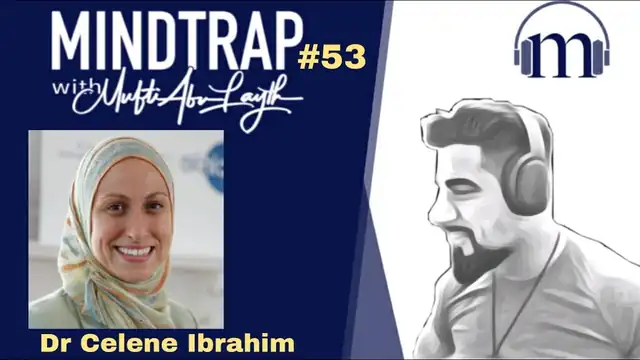
Dr Celene Ibrahim | Feminism, Family & Female Archetypes in the Quran | MindTrap#53 |Mufti Abu Layth
wudhu wudoo wuzu ablution al-wudu wudhoo salat salaah namaz salaat namaaz as-salah al-salah salawat hadeeth ahadith ahaadeeth hadis hadees ahaadith sahih saheeh sahih hadith saheeh hadith sound hadith ibn abi zaid al-risalah author ibn abi zaid al-qayrawani fajar salat al-fajr fajr prayer dawn prayer qiyam qiyaam qiyam al-layl qiyam ul-layl takbir takbeer takbirat takbeerat ramadhan ramzan ramazan ramadaan masjid masjed masaajid masajid maaliki malikite malikiyyah maliki school qiyas qiyaas muftis iman imaan eemaan eeman akhira aakhirah akhirat hereafter janna jannat jahannam jahanam jahannum koran quraan al-quran sura soorah surat suwar soora ayah aya ayat ayaat aayah aayat aalim ulama ulema ulamaa shaykh shaikh sheik shuyukh shaykhs ummah umma ummat fitnah fitan strife trial nikah nikkah nikaah nikah nama nikahnama hijaab hejab hijabi niqaab burqa burka purdah parda face veil in sha allah insha'allah in shaa allah insha allah inshaa allah alhamdulilah al-hamdu lillah alhumdulillah alhamdulillaah hamdulillah subhan allah subhaanallah subhanallaah ma sha allah mashaa allah salam as-salamu alaykum assalamu alaikum salaams salam alaykum wa alaykum as-salam greeting baraka barakat barkat baraqah tawakul tawakkal reliance on god aadaab adaab manners amanah amana amaanah amanat al-din ad-deen ad-din rahmah rahmatlive stream · 1:28:02 · 11,000 views · 11 Mar 2021 · Open on YouTube
 Press play to load from YouTube. Nothing loads until you do.
Transcript
machineauto-transcribed, may contain errors · source: youtube auto · click a time to seek · dotted terms open the glossaryAll right, people. All right. Let me just do a quick sound check. We is back. Allahu Akbar. I'm just bringing up the You guys, let me just see if if the sound is running. I don't want to be speaking away and you guys say, "Well, what on earth is Must even on about? We can't hear anything." So, people arrive.
Facebook, mi gente. ¿Qué está pasando? What's going on? All right. So, YouTube. Let me just bring up the comments. I take it. Yep, you can hear me all good. People, people, people. Inna alhamda lillahi wa kafaa. Wa salatu wa salaamu ala rasoolihil Mustafa. All right, people. We have today an epic, amazing guest tonight.
This is an exclusive for you all. Let me just bring up the profile right here. Allahu Akbar. Tonight's guest, Dr. Celene Ibrahim, who has who has graduated not only from Harvard, but also Brandeis, has taken out her valuable time to share her thoughts and insights with us tonight.
The author of Women and Gender in the Quran. People, those of you wondering what that's about, it's some amazing, highly interesting kind of discussions. Let's bring on Dr. Saleem. Dr. Saleem, Assalamualaikum Warahmatullahi Waalaikum Salaam Warahmatullahi. It's good to be with you. All right. An absolute honor to to have you on tonight. Shukran.
I'm deeply indebted for you taking your time out. I know you've got a busy schedule. And there's just so much I think needs to be shared with people, especially the viewers that I have. I think they're going to be so fascinated with what you have to say, Dr. Saleem. So, shukran once again.
All right. I just want to as we begin, I know we are pressed for time as well. You see, this is one of the things by the way, doctor, that I I love about the the recent guest. See, this is the professionalism. See, this is what you get really with converts to Islam. You get punctuality, you get calendars, you get dates, you get See, when I contacted Dr.
Dr. Saleem was saying, "You know what? How about next month on such and such" I thought, "Wow, that's how I need to be organized." Dr. Saleem, you know, you've converted to Islam, you've been through an academic journey, you've authored an amazing book which we'd like to kind of unpack some of that. Could you navigate us, you know, briefly if you if you like, through some of your academic journey?
What was, you know, some key moments, some just navigate us through that just to kind of some of our what our viewers can kind of get to speed with where you how you kind of progressed. Sure. Well, I I went to an international school where I first got keyed into Islam. I grew up in a rural place and there really weren't any Muslims and my first exposure to Islam was actually going on a backpacking trip and I was hiking through the woods and the guy in front of me had like this oriental rug wound up in his backpack.
I was like, "What does the kid need an oriental rug for in the middle of the woods?" It's It's a flying It's a flying carpet. Well, I mean, my reference points That was basically my reference points coming from where where I did. Um but that was my first introduction to to Islam was just watching this this beautiful young man like with this spirituality in the middle of of a 13,000-ft mountain getting out to go over to the creek and and do wudu and um of course I had no idea what all of this was.
I I um you know, my reference points were at that time were were very small with regard to Islam and Muslims. But then fast forward and I was able in the university in the context I went to Princeton University which had a great study abroad program and I ended up in Egypt and that's where I first started learning about Islam. I showed up in in Egypt and I knew shukran and habibi and I could put them together and like talk to my cab driver.
Uh uh that would be some very interesting talk. Shukran habibi, the taxi driver's like, "All right." So that that was where my my journey the intellectual journey started and I and I actually you know, about 15 years ago started learning Arabic and for those of you who are in an Arabic learning journey, um take heart. It's It's a long one, but there's um you know, it's a it's a lifelong pursuit really.
All of Islamic learning is lifelong pursuit. So then I just pursued um simultaneously sort of with my own studies then followed an Islamic studies track through undergrad and then into Harvard Divinity School where I prepared a track that's traditionally for religious leaders, but in other traditions I was Harvard Divinity School's first Muslim to graduate with an MDiv, which is typically a degree in pastoral care and counseling.
And this is what would enable someone to, for instance, become a pastor, a minister in in Christian or in UU traditions. And so from there I pursued a PhD in Islamic studies. Wow. Masha'Allah. And the the book that you've authored, this was part of your studies, academic studies, or was that independent?
Yeah, I have to show folks the cover. I really like it. It's It's a beautiful people. Take a look at that. The women and gender in Islam. It's Is that available on Amazon, by the way? Just Uh definitely. And actually at the publisher's website at Oxford University Press website, there's a code that you can put in and it's a family and friends discount. So maybe I'll Yeah, all right.
Doing it, people. You're doing it. Look at this. Look at this. This is a special gift for you guys. But yeah, to answer your question though, this this came out of a dissertation project. And if there's any people out there who are writing dissertations at the moment, I'd say go for a book, you know, and imagine your dissertation. A lot of people take you know, take so much time to to spin it out into a book, but I really worked on the dissertation project knowing exactly who my audience was and who I thought a publisher could be for this work.
And alhamdulillah Allah subhanahu wa ta'ala facilitated the the affair. And And so, yeah, this is a project I've been working on for six years now. Wow, six years. So, this book, I came across you for for the viewers. I was telling Dr. Celine that I came across Dr. Celine's lecture on YouTube.
And, you know, the algorithms brought it up apart from the usual kind of Bollywood they bring up for me and the usual kind of stuff. All of a sudden there's something academic female archetypes in the Quran. I was like, "Woah, what is that about?" And I kind of watched it and it's the lecture you're doing at Zaytuna, I believe. It's at Zaytuna, wasn't it?
Um I have to say I was um I was I and I wrote this when I in my email to you as well that I was really um taken aback by the not only the the kind of analytic perspective, but also the strikingly neutral kind of stance that you took because sometimes people ain't too sure when they hear something new, you know, it's like, "Oh, and they're thinking, well, is this person coming from a very critical perspective towards what already exists?
Are they coming from a highly innovative? Is it a very And And you know, you're not too sure, but it's something that you delivered it very uh comfortably and it's not something that uh kind of shakes people, but just kind of raises curiosity to investigate. Tell us Tell us about this topic um female I mean, it's not Your book isn't titled Female Archetypes in the Quran. It's Women and Gender in the Quran, but um why is this important and and unpack a bit of this book for us?
Yeah, so if you can imagine an American girl coming then into one coming into Islam, I was faced with really stark contrast in terms of what femininity meant and what was ideal femininity and and how was I to reconcile messages about like empowered girlness that I was raised with and then on the other hand this kind of demure Muslima woman that that I was presented with and at the same time I I was a wife, I was a new mother and so I was trying to figure out for myself how I would draw the maybe the best of of what
the Islamic tradition had to offer with a sense growing up that I I really did have a a just inherently not not not because of any one thing but a real conviction in in the power of women and the intellect of women and in the capacity of women. And so when I would encounter as a very new Muslim kind of books that would teach me how to pray but then would also have really misogynistic statements put sparse uh distributed in there with kind of the the core facets of al-Qaeda, I really had to sort out and go through that journey of asking what is Islamic versus
what is a culture that has been been imposed onto Islam that I don't necessarily have to see as binding upon myself in my quest to define what it means to be a mother or wife or Because I cuz I think that's just you know just a brief point just uh what you what you're saying there is so important because you see for Muslims uh especially from the cultural aspect because for the most part most Muslims will be people with some culture from the East somewhere or from um you know from Africa or somewhere.
Now because they've been born and and raised on that culture sometimes it's difficult to spot like it normalizes it whether it's good or bad but it becomes like oh well this kind of stuff happens. So it's interesting because you're coming at it from entire outside perspective not having been exposed to normalization of these kind of perspectives and then you've got all this misogyny, all these kind of things appearing.
So, it's it's it's kind of obviously disturbing, but yeah. Sorry, you you carry on. Yeah, I should also nuance what I was going to say though, because at the same time I found all of these tremendously refreshing perspectives, such as giving women property rights. I mean, my own grandmother living in the US would have probably had to ask permission from a male relative to open a bank account, right? So, there's so many there's so many ways in which what I saw in especially foundational sources, and I came from a from a Catholic background, and I was probably one of the first generations to be able to be a young woman and be involved in in what is I don't know what it's called now, but it was called being an altar server.
And so, I was always very active with religion, but at the same time I was aware that the tradition that I came from in terms of of having a Catholic upbringing was very patriarchal. So, when I came into Islam, I actually I came into Islam finding a tradition I thought that was not um you know, patriarchal or misogynistic fundamentally in in its outlook.
And that was one of the things that drew me right from the very beginning. Yeah, wow. And this is something you obviously these are some of the challenges you tackle in your book. Uh navigate I mean, help us navigate through the book. I mean, what are some of the key topics that emerge, and also some of the challenges maybe that you found along the way?
Yeah, well one of you know, going on this note about finding empowered women as as role models within the tradition, one of my curiosities in approaching the Quran was to really understand why we had all of these prophets who were named by their first names, whose stories really teach the backbone of Islamic sacred history. And so, I wanted to explore a little bit where in this arc of a narrative of sacred history, where were the women figures?
What are they doing? What is their importance? So that's one of the questions that I started the book off trying to trying to really solve um for myself, but also because I was at that point uh simultaneously with writing this book, I was serving as a chaplain in an American university and a really uh prominent research university, and I was working with young people who would ask me these kinds of questions. And you know, if I'm going through a degree in Islamic studies, but I can't uh respond to the people who are right in front of me asking, you know, out of a a spiritual care need to to understand, you know, what good is an education if you if you really can't respond to the questions that you're that you're being asked.
Yeah. No, that that And that's I You see, this is the importance that people don't understand. I actually was just speaking to somebody today highlighting and and this topic came up that look, you don't understand how these challenges can completely plague certain individuals just because it's not maybe a problem for you. You know, for a person like I was saying to this to this guy that okay, it may not be a problem for you or, you know, but this there will be like the I said, there will be several women that will read certain things and it
will I mean, it's an app it could sink everything because even the character in which the prophet is being portrayed to certain people, it's so damning to the whole to the whole deen really and a disservice to the prophet Muhammad alaihi wasallam. So, Yeah. Yeah, you know, it reminds me of an analogy that I think is is apt. Uh so recently hosted a student I work at a boarding school and I hosted a student from South Korea at at my home and I asked her, "Do you have any food allergies?" And she said, "I'm allergic to cucumbers." I said, "Cucumbers?
I I don't know anyone who's allergic to cucumbers." Uh you know, so I pressed a little bit more just and and she said, "Actually, I'm not allergic technically. It was just a bad experience one time." And I think we have to be so sensitive to how a bad experience one time can send somebody running from from the faith or can you know, really change someone's outlook and push them further away or on the contrary, you know, one encounter can really bring someone into the fold of Islam.
So, you know, we're especially those of us who are public figures, we really have to think about the power of our speech and our persona in in terms of this tremendous responsibility of of teaching and um you know, serving as as a role model for people. May May Allah help us and and you know, forgive us of all our our own um shortcomings. Amen. Amen. Um you know, you highlight the the kind of um I don't know if it's if it's just a role or the dynamism of certain female uh
not just not just personalities but also it just entities in the Quran. And these are sometimes kind of brushed over. Like people don't um you know, they don't I mean, it's not that they don't read it but it doesn't maybe register in that way. I mean, if you yeah, shed a bit of light on this for us.
Yeah, so if we look at uh Surah An-Naml for instance, and we think about why is the surah that titled after this ant who appears in maybe two verses? And why does the story of this little ant appear before this and this encounter between the the Queen of Sheba and Suleiman alayhis salaam.
And then we look a little bit further and we see that if we think about the ant colony, they're run by a queen ant. And so there's a very interesting parallel between the queen ant who is, you know, commanding her ant minions to get in line, seek shelter so that they're not destroyed by Suleiman and his his hosts. And then we go into the Queen of Sheba who is very much I mean she is a masterful diplomat in the Quran and really concerned about the welfare of her people.
And in fact when her advisers want her to go to war, she reasons with them and said, "Well, you know, if this goes badly, you're going to be the first to go essentially." And you know, manages to to come to some kind of truce with with Suleiman and submit with Suleiman, my Suleiman, to the Lord of all the worlds. So, I I think if we pause and, you know, do that tadabbur of the Quran, we really see that Allah subhanahu wa ta'ala puts these subtle messages in there for us.
So, you know, Suleiman alayhis salaam was a king with a mighty army, but Allah subhanahu wa ta'ala gave him the intellect such that he could pay attention to a tiny ant. And how many tyrants do we have in the world who not only, you know, would just stomp on a a pile of ants, but treat people like ants. And so it goes to show us that uh Suleiman's relationship with the Queen of Sheba, he um very much, you know, he was fulfilling a you know, prophetic command to to teach her, to to bring her the message of Islam.
But Allah subhanahu wa ta'ala in you know, in that encounter right before that was teaching him humility and was teaching him, right? He hears the the words of the ant and then he instantly launches into the like this is This is shows us the character of of his leadership, I think. Yeah. Um and there's there's really interesting things I that I talked about in the book in terms of linguistically. Uh absolutely. And I think one of the uh amazing parallels and it's interesting because it's a testimony really to show that certain other traditions which I've uh in in in in the past highlighted uh
are not really authentic and not accurate where women will be shown to lack intellect. It will state things like nakisat aklan so on in some of these traditions that which um which is of I mean, people may interpret it. I've actually said that it's not authentic. But in the Quran, this story is a fine example because it clearly smashes that to pieces because in it the advisers are actually advising with brute force.
Like they say, you know, we'll get an army and let's do this and she says, "What do you think? What what should we do? What's the course of action?" They're saying, "You know, we can deal with this. We've got might and we've got this and and she responds by kind of showing actual wisdom. And she goes on to highlight you know, like you know, you see when kings and monarchs they enter something. I mean, they will ultimately they will be corruption.
Um and I think that's so profound like this symbol here in the Quran that wait a minute, she handled something um and it's kind of brains over kind of that brute force in saying, "Well, actually, you know, we can handle this diplomatically and have a very successful outcome." Um so that's it's not that people don't read this, but sometimes I think uh I agree with you that maybe that the double from that angle isn't there.
But I think that aunt angle that you picked up on the feminine archetype that this aunt that was something that did surprise me. I was like wow, I never really thought of that when I was watching your lecture. What are there were there any other examples that you had strange reactions about or Well, I in the beginning of sort of the crisis when Allah wants to overhaul the entire social order because there's corruption and oppression at the top and wants to make those who are oppressed the amends of
the land. The very next verse is going to Allah inspiring right using that word inspiring the heart of a woman. She's nursing her baby and Allah inspires her to then you know take this tremendously difficult action of putting the baby in the water. And I think we can we can look at this story in several ways as a contemporary audience.
One is that sometimes Allah gives us this crazy like rationally like why does this make sense? But you know we pray that is the fire and we get this you know go for it or or we just have this intuitive sense that this is right for us in this moment. I'll share with your audience. I met my husband and three weeks later we were married and so it's just one of those things that's like that Was that was that the case?
Yeah, absolutely. It was just for both of us. I think one of those um It was probably more like six weeks but it wasn't much longer than No but as a just as a tangential note on that on your your marriage within in short within that short time span You see, I've been asked in the past about questions where people have said, "Look, oh, you know, Mufti, what would you say about relationships and getting married and doing this?" And and I've said that, "Look, me as a person or what I would see
uh in my own life that some of the I've said that look, obviously everybody does their own version of due diligence or whatever, you know, there's that kind of intuitive and and the investigation into looking at something, but I've said that in my own life, the way I've done things is wherever, whether it's been any matter of significance, it's actually been quite impulsive.
It I mean, there's an element of I've looked at it. There's been some rational kind of rationalization of it. And and then it's been almost like an impulsive decision with tawakkul. Like, yeah, you know what? Let's do it. And I'm not saying I don't do any research. I would, but it's been always very swift. Um and I'm the fact that you said that, I thought, "Wow, because you see, in this day and age, there's almost an encouragement to do the exact opposite.
That takes so long, you know, take years to reflect over things and and I just feel that it really confuses people because so um so I mean, yeah, especially, you know, being Western yet looking at this this element of intuition, almost impulsivity. Uh I don't know if there were certain things you you just want to say on that then we'll jump back to the topic.
I I think that's I think that's a a a great point, but at the same time, I think if you've if you were to develop intuition, which you know, Islam is really it's a religion of intuition. It's a religion of like reading your surroundings and you know, knowing yourself deeply and knowing Allah Subhana Wa Ta'ala. So, between knowing yourself, knowing Allah Subhana Wa Ta'ala to the extent that we're capable, and and being able to read our surroundings, I think it does the as a you know, if you're practicing and practicing regularly, I think it does make you more of an intuitive person.
I think you can get a read of people very quickly. You can, you know, understand something of them from their aspects, and you know, understand the extent to which you can trust them, or understand the extent to which they um you know, that that they bring a beneficial energy in into your life. So, whether it's a a decision, kind of a quick decision about a relationship, or you know, other things. Like, that's why we have practices that are for making decisions that are grounded in our in our faith, because, you know, life is just we make so many decisions on a day-to-day basis.
We we have to get get good at being intuitive about it, inshallah. Yeah, and and it's interesting that I've highlighted this before as well, that psychological research shows and the studies show that the more uh the the more options that are increased, the more crippling the effect on the individual. So, when a person is given and also people report less satisfaction overall.
So, just in even in simple studies where people were given food items, or they were given channels to watch, or they were given and where you had an option of five or 10, and compared to people who had an option of 200, and it not only was it crippling, they overall feel very dissatisfied with the whole thing. It's just interesting.
I mean, I I feel that it's a new age kind of obviously challenge. It's not this luxury wasn't really there for people in the past. But, yeah, I just digressed because I thought, you know, people would love to inshallah get your thoughts on it. But, yeah. can can we not can we continue digressing because I think it's a it's useful of digression because part of part of what I think plagues certainly me and certainly other people that I've spoken to is the fact that we do have so many options.
And so, what does it mean to, you know, in this pandemic time part of the lessons that I've learned is just to reclaim my time. Like spend it reading more Quran or spend it really doing those useful things. And you know, life is is awesome. Life is a fading day, right? And so, I think so many people maybe are are trapped in kind of like spinning in a in a in a circle or feeling like they're not like progressing in their life. And you know, I think I I've explored a lot of different paths in life.
And I really think that that Islam gives a perspective wherein your your human life has a purpose. And so, it's kind of just ask yourself basic questions. Like what good did I do today? Who did I You know, who did I support? Whose life did You know, my presence enrich today? You know, how much You know, how did I How was my today? Like it's this constant murakabah. And And that gives life a certain purpose where, you know, without without that I mean, we were talking about intuition.
Now I'm kind of shifting into this realm of of purpose. But I I think that that's that's what a deen is supposed to do. That's what a way of life is supposed to give you that structure. And And that's too one of the the things that brought me into the fold of Islam. I was a university student. I said I have the the whole future ahead of me. I can travel wherever I want to in the world. And things were looking really wonderful. But I said, I still feel like there's a big hole inside me that is not filled.
And And for me, what fills it is that, you know, that deep spirituality which you know, helps with the sense of intuition, but also helps with that sense of life purpose. Yeah, no. And I And I feel these things are um, you know, absolutely related. Um, you know, purpose, intuition, these things. And as a chaplain as well, because that's, you know, you're involved in chaplaincy work, dealing with the struggles of young people, people who are today where you were at some point of life.
And you know, who are riddled with constant um, immediate the immediacy of gratification in addition to an unlimited amount of choice. Like everything today is about choice. Um, and people are pressured. You know, there's this um, uh, because we you you you know, we were speaking of relationships, there's this immense pressure that, you know, oh, uh, you have to find the one.
You have to do this. This has to be perfect. It has to be whole of life has to serve to this majestic kind of dream, this kind of Hollywood, uh, movie almost of of a relationship, and that is your trophy for what you've achieved in life. But I've said that, look, the problem is that people, you know, they would go on their phones. Let's say you're on Instagram. You just the it doesn't matter like they will there's so much everything you see you'll you see something better.
And you're being constantly, you know, this in the crypto world, this thing of FOMO, the fear of missing out. Oh my god, this is better. You know, thumma khair, thumma khair. Oh, that's you know, fawqa kulli dhi alimin alim. But this is being used in a negative way. And it's I think in some ways it's the people who, let's say, slightly older generations or people who didn't grow up native to technology.
Um, and and those before, uh, them as well that they had that part was almost a it was a blessing although it it was at you know face value a lacking they didn't have the such access but it it helped it was a blessing in giving some peace of mind.
Yeah so yeah I mean that that I think especially you know you you insight on this I don't know because you obviously having a lot of people coming to you in the chaplaincy you know people I'm sure they must be plagued with these kind of problems. Yeah actually when I get people who come to me and they're starting to think about marriage I actually ask one question right away off the bat and that's what's your worst qualities right because we have to know ourselves and I said you need to find a partner who you know their worst qualities and you find them endearing and you can deal with them and they know your worst qualities I think people try so hard to put their best you know foot forward and
I think there's just something you know we have to be honest in knowing ourselves and knowing where our lacks are maybe some of us you know not everybody some people really need a confidence boost and need to think about what are their good qualities but but really I I think especially when people are looking for partnerships they really have to have this honest assessment of their own character of their own personality and understand what what kind of personality would complement theirs and then unfortunately we have all of these other things like what is the person's ethnicity or how much money do they make what is their career trajectory and that just gets in the way for our young
people and I'm I'm so happy that my you know my my parents of course they were kind of shocked that I had converted and they were shocked that I was going to stay in Egypt and keep learning Arabic but they were shocked when I was I'm get married but I'm very happy that that you know, at at least I'm hoping. I'm hoping You just seem to be You just seem to be giving them shock upon shock here.
That's one strategy. Um but yeah, but I what I'm what I want to get at is that they had to my husband's parents had to overcome um specifically his mother had to overcome what it meant for him for her to have an American as a as a daughter-in-law. And my father in particular had to get over what it meant to have an Arab as a son-in-law. And you know, there it was interesting seeing on both sides what their preconceptions were.
And so much of when I deal with young people one of you know, it's hard enough to find someone that they click with and someone who they want to spend a life with, but then all of these issues of of racism and classism and you know, other other isms get in the way of of people who who really just want to start out on a life together. So, I know most of your audience is probably millennials and Gen Z'ers and we can't we can't be hearing this.
We have to just like stop being racist when it comes to selections of of partners. It's just not acceptable in Islam. Yeah, I mean racism, uh classism, I mean castism, I mean there's all kinds of And then I think there's these other problems as well of sometimes like you mentioned expectations.
I think sometimes because disappointments are ultimately just miscalculated expectations. So, where you've got where you said, "Look, I say to people, well, okay, let's be real. You know, what what problems have you got in you? You know, if you look in the mirror, what what what are your you know, into yourself, what are your issues? How are you a difficult person?" Um but on the on the flip side like the the kind of high expectations of not just the other person, but also the the entity or the the kind of phenomenon of
a relationship. Like this kind of You see, because by its very nature, that this has become the ultimate pursuit in the in the Western world probably now. It's like this is the highest the hallmark of happiness is being in a successful relationship. And if you're not, you're almost an unsuccessful person. You know, you you you you could That's how people It's It's the ultimate, I think, right now.
And And it's it's a challenge because I'm assuming because the very nature of these things are these emotions, these these living with people, and these things will always be challenging. And sometimes things work, sometimes they don't. Um and it it has that, you know, "Oh, I failed. And then I I need to find this perfect dream." Um I don't know. I mean, what do you advise people when it comes to this?
Cuz you said, "Look, I advise them when they come to me about you know, the other person, I say, 'Look at yourself, and will you'" But what about this this dream that, "Oh my god, you know, this I need this relationship. It needs to make me whole." And what do you advise people? Yeah, right. So, there's two dimensions to finding a life partner, at least two, and probably more. But one is the dimension about that interpersonal relationship between the two of you.
And then the other is that you're coming into a family, both of you are coming into the families. And you know, coming into families that sometimes are preoccupied about what what that looks like to the outside world. And And so, sometimes for for certain people, just you know, being able to find someone who they click with is hard enough without all of the family pressures.
And especially for women, you know, they're told like study study study study study. Okay, you're a doctor now, get married. And there there's no mercy around around this sense of you know, if someone has been so focused on education for so many years, they've kind of lowered their gaze very intensely. And you know, now it's just telling them all of a sudden, you know, putting that pressure on on young women. But there's a young women specifically cuz there's a biological component, you know, to to that women certainly feel.
But on the other hand, young men certainly like the the way Islam is set up that some of those pressures to support a family are going to fall on on young men. But we live in a society today where women on the whole are very educated. They're they're earners and I think that if if men could um realize that you know, maybe they're not going to have enough to kind of fully support a woman and maybe that she's going to bring something into the marriage in terms of you know, paying a mortgage or you know, paying the phone bills, the electric bills, whatever.
The car needs new tires. And so I think if we're caught in the paradigm of sort of a a man has to, you know, have an apartment and a car and a you know, all before a marriage can even take place. Like marriage isn't fundamentally it's not about companionship. And And so, you know, there's of course we have to be attentive to our families and sometimes they they know what's best for us.
Sometimes our families have ideas about what's best in their eyes, but it might not be what's best for Of course. Yeah. No, I mean absolutely. I think that's a very good point actually because it is true that you see, it's not sometimes it's not. Sometimes there's certain things that are clearly wrong. Yeah, like like you mentioned racism and things like this.
But sometimes there are some things that may not necessarily be wrong. It's just that that generation is you know, that's their mind. You know, that when they grew up that's the kind of mind they're presenting. So they're not necessarily it's not about right or it's about the day and age has moved on and accepting that people are kind of different and they've moved on. And it is you're right because the the familial ties in Muslim in the Muslim culture broader culture is so deeply rooted in relationships that it's not you know, they're not their own person.
It's still like you said you're marrying into an entire family. And yeah. But The other thing that matters are demands like a very expensive elaborate wedding. I mean that just puts so much pressure on the couple and it means that a lot of their getting to know one another that that period of like when when the marriage is very fresh or the engagement is very fresh they they're bombarded by kind of like this napkin or this napkin and it's just kind of very very petty.
So I would encourage I would encourage all of these people out there who are like planning weddings like look at the example of our prophet when when he married and when he married off his own daughters. It was you know, something respectable commendable beautiful you know, inviting to to the community but we don't have to be ostentatious about this and and yeah, so don't be racist classes castest and and Yeah, and and I think that that's so true.
I was saying that people when it comes to things like anybody that was thinking of a marriage COVID is the best time. Because it's got to be just it's got to be like well, you know, a few people and that's it. Cuz I You know, I was actually I've mentioned this previously as well, but I was discussing it that I see on Insta stories, yeah, and on online social media.
I see people they'll be posting about weddings and you know, somebody might be now obviously with COVID, but still people post maybe previous clips and and I think woah, this is a nightmare. You know, like the amount of pressure to have such an extravagant wedding. And then they've got to do everything, you know, now and these are Muslim weddings and they've got to have you know, like people will have helicopters, they'll have certain lavish cars, then there's got to be doves, there's got to be the camera, it's got to be like a movie, they've got to have the kind of dance now, they've got to have You think, what the hell is all of this?
You know, that that just it's just so stressful think and I think bloody hell, thank God it's not I'm not a part of that generation, but I feel that still it's a lot of it is peer pressure as well, you know, this kind of like if you you know, to to emulate um and yeah. Yeah, the other advice pieces of advice that some people are just not in a position in life where they can get married and but yet they still have a tremendous longing, right?
We're human beings, we need companionship. So, I've two really good pieces of advice. One, get a kitten. It's like a no fail. If you need love, get a kitten. I don't know how people are going to interpret that, but The second one, this is the more religious part of that. There's a practical part and this is the more religious part is that if we cultivate love for the prophet that can sometimes fill that void of needing that sense of companionship or feeling like needing that sense of having energy to love something or love someone and and want to you know to direct that energy cuz it's a real you
know especially I I don't know about the experience of being a man I never was one but especially for women that get capacity for love and needing to like put it out onto something and so I tell women who for whatever reason are not in a position to get married or having a difficult time maybe finding someone to to marry but you know just keep you know increase the salah on the prophet and and that inshallah you know it yeah and when people then finally do get into a situation where they can marry they they bring into that marriage a deep sense of
self fulfillment that is you know in some respects independent of the other person so each partner in the marriage should have a really robust spirituality it's not like it's not that the marriage um you can't depend on the other person for for everything right you need to have your your own sense of of life fulfillment and your own kind of relationship with Allah subhanahu wa ta'ala and your own you know your own sense of self that um and you know that's what makes a healthy partnership when both spouses are are bringing a sense of wholeness um inshallah no I think that's incredibly important
that maintain a sense of selfhood because sometimes what happens and it's interesting these these things are covered in a lot of psychological discourse and discussions that look there's this idea that when people are in a relationship there's a joint identity and sometimes people can lose a an individual identity into this new fused kind of identity and the problem with that is if things, let's say, God forbid don't work out, uh sometimes they don't, sometimes they
do. If they don't, it can leave people very shattered because they never had a they never continued to keep their own kind of identity and keep themselves and their life as well on a kind of on its own conveyor belt. And yeah, so I think that's very, you know, very powerful words uh there, Dr. Sulaiman. You know, you said um about Rahma a moment ago, and it just reminded me with the with the whole discourse about about Allah, Rahman, this whole thing
uh tying in Islamically the the Hadith that uh that that the the womb, the rahim in Arabic, um this is linked to Rahman. And whosoever in the Hadith severs the womb is severed he's he's kind of severing his ties with God, with Rahman.
But the God about but I mean the the the presence of God being locked into uh this femininity of the womb. Um I mean, this is it's something amazing in in when when a person thinks about it that uh and I know we were say we were speaking about this previously that when people come to scripture, especially the biblical uh texts, God is presented as a as a as a man.
Almost like it it's not said he is a man, but it's kind of like the understanding, the image is, you know, we fashioned Adam in our image. So, God is this man. And then men identify with God. Um but it leaves the entire genre and of of women. It and really the Quoran or or God there is no gender. And this is something you and within Islam as well that you deal with.
Um tell us a bit about this. Yeah, we have to think about the word zawj here because we know that Allah subhanahu wa ta'ala has no partner, right? No kufu, no no equivalent. And we know that for human beings to continue as a species, you have to have procreation, right? Like so we're we're inherently bound in in gender because we have to procreate.
And that's kind of the the the fundamental like at this ontological level, this is one of the one of the you know base just basic differences between the created world and Allah subhanahu wa ta'ala. So we when we think about our our gender or our our sex body, maybe we want to say like male, female, you know, some people are intersex.
Um what that's a reminder in a sense of our dependency on you know, our interdependency on other aspects of creation, but ultimately you know, our our status as uh the the the creation of of Allah subhanahu wa ta'ala who has no partner, who needs no you know, just fundamentally does not need a a gender, does not procreate.
Um and I think a lot of our we overread, overthink gender in in some ways because we try to ascribe characteristics like men are strong. Well, women are strong, too. You know, like the the physical strength of a female body to take it back to the language of the womb, you know, to be able to uh create another like like make another human being in inside a woman's body.
And you know, subhanallah, Allah subhana wa ta'ala makes that possible, but it's the woman's body who who does that that does that intuitively. And and so I guess what we're you know, gender to me is very much in a feminist lens it's separated from biological sex and biological sex is obviously what we're talking about when we're talking about reproduction. But if we're thinking about, you know, gender and and God for a second we we just have to realize that um some some many of the ways in which God has
been written about and explained, with the exception of the Quran, with the exception of of um Hadith you could probably say, have been through a very masculine lens. And so, we have all of these subtle corrections in our tradition that are so very profound to say, you know, God's love is is is like this. Is like, you know, greater than than a a female creature for her offspring.
God's love is, you know, And and so, it's there's a certain language that that needs needs the imagery of kind of a a an offspring like a a parent and an offspring to be able to communicate something of of that relationship. But we're really very different as Muslims as we don't say father, you know, oh father who art in heaven, hallowed be thy name.
We don't we don't say father, right? And so, why why not? And because it's it's a kind of an in a sense, I mean, from a Muslim perspective, it's a bit of a lie to to use this language that that doesn't pertain. And so, Allah has given us all of these other names, right? To to which to call um to to call upon, you know, him. I have to use the English pronoun, right?
Um so, yeah, it's I think for I have to always explain, when I teach Islam to non-Muslims, that just because the translation says him, that does not mean that you should in your head imagine a a male being. You know, we we don't have the God of the Sistine Chapel who is embodied in a male form. Exactly. Exactly. And I think that's so important to to highlight because it is unfortunately at times it's kind of inherited like that.
Like people inherit that kind of understanding and they think, well, you know, and and so some people may look at it, well, you know, the Quran in its kitab in its addressing is in its the kind of linguistic apparatus that it has obviously restricted by the language in which it's, you know, it's being revealed, which is the which is Arabic.
And Arabic by its nature, when addressing generically, will use the plural masculine. So, like if we if we say, you know, "Qumu." Stand It won't say "Qumna." It will say, you know, "Stand to prayers." And it'll use the masculine. Uh even if if the feminine is there, they will just generalize it with the masculine. And that's just how the language is.
So, people may think, well, oh, so the Quran doesn't really address it just addresses men. You know, it seems to be addressing men because all of these pronouns are are male pronouns, masculine pronouns. Um is this something also that uh part of the challenge that you faced as well and you express in this book? Absolutely. And what I think it points out is that when the Quran does address in specifically females, that that that is we have to really pay attention to all of these instances because it's addressing females throughout the whole Quran, you know, with with men.
But then there's this very special address and sometimes the Quran very specifically addresses men. For instance, there's lots of verses about female sexuality, right? Telling men when or when not to to have sexual relations with wives and and etc. And some feminist thinkers have said, you know, why is the Quran always, you know, talking to men about women's sexuality, right? And just to put this out there.
And right? Yeah. And and my, you know, my response is that this is this is a way of Allah Subhana Wa Ta'ala like supporting women in articulating their boundaries. And you know, that the Quran addresses men it's it you can see it as not that somehow it's like favoring men in in talking about women's sexuality, but all of these verses that we find that are addressed to men about women's sexuality are usually, and I want to say all of them and I'm just like kind of going through in my head, but they're talking about men
restraining themselves, which is a message I think a lot of women want out there. And so Allah Subhana Wa Ta'ala, you know, one way to say it is why is Allah talking to men about female sexuality all the time, but the other thing is Allah Subhana Wa Ta'ala is creating a space for women to just, you know, be able to be on their menstrual cycle and not be bothered or, you know, to to be able to be postpartum and not be bothered or to be, you know, all all of these things to have to have be able to have fast, you know, Ramadan and really focus and and not have this distraction.
And and so it's it's all a matter of perspective, really. Um we're all kind of when when we when we look at at what, you know, when is the Quran specifically talking to to women and when is it specifically talking to men? And even by the way the verses on on um lowering the gaze, Yeah. I and I cross this a lot as a person who wears a scarf and is in American context. Um This is it's not that I have um absolved men from lowering the gaze by taking on a a scarf.
No, the Quran says men lower your gaze first. It says women lower your gaze and then it says, you know, you to cover cover yourself. Yeah. And and that so the covering in this case is a sort of in the case that this first thing doesn't happen. In the case that that a man doesn't lower his gaze, well, you have like a backup plan, right? Exactly. And I think that it's it doesn't, you know, wearing a scarf, there's a feminist argument that, well, why you shouldn't have to wear a a scarf because men shouldn't be like, you know, looking in the first place.
Like you're taking on the onus of of the man's responsibility, but you can't control other people. You can only, you know, work with the means that you have available. So that's the way I That's what I understand. No, absolutely. And and it's And this is what called the yield as well in his explanation of this. He highlights and famous Andalusi Maliki scholar from almost 900 years ago. He highlights that when he's discussing things like the hijab and niqab, he said that um the onus is on and on he mentions the verse that it first addresses men.
A ya ghuddu min absarihim, that this is the responsibility. People who argue that, oh, we should superimpose that, oh, women should also have a niqab because it's now a fitna. He said, "Well, if it's a fitna, then you know, they they should not be kind of engaging in that fitna. And they should be responsible." And and that's 900 years ago. Um So, I I I mean, it just ties in with what you what you're saying.
You know, I I wanted to highlight here as well, and I I've said this before that I know a lot of and some people had mentioned in some of the comments as well that You see recent times um feminism has attracted a lot of criticism, um especially from men, naturally, which you're going to think is obvious anyway.
But, sometimes it comes across as kind of just man-hating. Um and one of the things that I felt, you know, when I was watching your lectures and your explanations is that how you'd so uh you know, beautifully not um you know, kept it absolutely free from any of these kind of dynamics, and it's just been very much, you know, absolutely neutral, but highlighting the key importances of of the feminist uh whether they were the archetypes or other parts of the Quran or just the priorities.
Do you feel this is a problem, this uh because you see, the term feminist for a lot of people uh people think oh, this is going to be another, you know, hating on men kind of uh just a non-stop um kind of just a rant. And I don't know if you get the Do you get this? Um do you experience this? Yeah. Well, I think actually the more poignant critique of feminism is that, at least the way it's historically developed, is that in certain places in the world it's been used as a tool to elevate whiteness over other um paradigms or or Euro-American culture cultural norms
over other societies and civilizations. So, feminism has been completely if we look historically been co-opted in in this endeavor to you know as um a some feminist thinkers have put it save you know save brown women from brown men. And this is so I thought that this is this is a legitimate critique. You know in terms of feminism being man hating um some men deserve to be hated.
Not all of them. I would would agree with you definitely. Yeah. But it's a it's a nuanced framework and you know at its best and and you know what I participate in is kind of an an intellectual feminism that is really thinking about systematic oppression of not just women but of marginalized people.
And this is where I think we can say that Islam has a very strong feminist impulse to the extent that we define feminism as being concerned with the socially marginalized. And um so I don't think that there is a great disparity like I don't I don't I know I I didn't explicitly in the book I discussed why I don't call it a feminist critique and and my friends in the study of religion and feminism were were kind of pushing me to be like why aren't you more articulate about you know the feminist trajectory that you do come out of you know intellectually.
And part of the you know so I talked about the colonial critique but the other the other part of feminism is that it can you know at its best it makes room for all different types of expressions of of what activism looks like of what empowerment looks like of of what agency women's agency looks like. And so sometimes you get a more domineering kind that for instance maybe absurdly um you know uh just unfair to to men in in a particular way.
But sometimes the pendulum has to swing, you know, so I I I I totally agree and it's just I because I you know, when you I see things on social media generally as well with people when I speak to them and I sent because I many people, not all, and you're right, um you know, there's unfortunately certain Neanderthals still going on, but a lot of people will um or maybe more more and more increasingly people uh are in sync with
with how you know, a feminist rights, women's rights, women should, you know, there is no addition be kind of distinction, there shouldn't be some kind of superiority or preference given to males over females. Um that kind of thinking is becoming I feel anyway alhamdulillah it's becoming more and more uh normalized and and inshallah it'll become the way of looking at things.
But um you see what happens is I I do see the when people say that look is this not being polluted with all this kind of trash talk? So for example people will associate masculinity with toxic, you know, like toxic masculinity and and what it does is it kind of just makes a lot of men before they can even hear they'll just switch off.
Because I do feel that in this day and age there is an increasing amount of young men who feel that you see as the culture is becoming more and more politically correct, it's kind of marginalizing a lot of men and they then don't know where to go because they don't have a voice. And this is why people like when Jordan Peterson kind of really blew up because he found these people found somebody that they thought, oh well, yeah, you know, here's somebody who's articulate, who's kind of expressing the male concern.
Um and I feel that it it is sometimes pushed with what um the social uh you know, maybe marketing or things like this where people are saying anything that's masculine is seen as negative and and feminine is neutral. People are not demonizing necessarily the feminine, but they are demonizing the masculine.
Um so I wonder if you've uh because uh in your perspective you've come at it from a a very elegant way. And I you know, I found this very uh highly admirable and it was one of the things I was saying to you, it's one of the things I actually said to uh Dr. Joseph as well and I know on the show we briefly discussed, but even after after the show I was saying this to him that you know, it's one of the things I must say when I first clicked, I didn't know what to expect and I was thinking, okay, this will be interesting.
What are the female archetypes and in the Quran, but I found that you know, you you very elegantly did this and you and you and you didn't kind of stir any any negative emotions, but there is a bit of this and I was wondering if you'd um seen that in the circles uh of feminism, if they acknowledge there is this concern. Um we don't want to switch men off.
Yeah, I want to answer that that question for But before that, I was going to say I was so shocked when I first came into Islam and I would enter a mosque and I would see men like grown men, you know, crying and reciting the Quran and crying and praying and crying and So for me, growing up in an American culture, I had I don't think I ever saw my like men in my life cry. Um There's People cried maybe a few tears if someone died or something like this, but this wasn't This this type of masculinity that that was soft, that was that was like openly
spiritual, that was openly vulnerable. I I hadn't seen it growing up in my particular household in my you know, social networks and things. When then I started reading about the Prophet Sallallahu alayhi wasallam, how his skin was so soft and how he was so Sallallahu alayhi wasallam like gentle. And I just found this beautiful masculinity that that Islam presents.
And I teach now at a I teach young kids. I teach, you know, 16, 17, 18-year-olds in my current job and I get to teach them Islamic ethics and we talk about gender. And in you'll you'll see it in talking about these um depictions of the Prophet Sallallahu alayhi wasallam, they're so very touching to these young men who are not Muslim, who come, you know, from different different cultural backgrounds entirely.
But they see in this image, this this depiction, a beautiful masculinity that is vulnerable, that is gentle, that does cry, that does, you know, have a really intense um inner life. And you know, the Prophet Sallallahu alayhi wasallam is obviously an exceptional human being, but is also an exemplary man to to men. I have a question for Um so I think I I when we, you know, bring it to to our present context, there are so many social pressures on men that um are just they're unrealistic and they
they create I think it's fair to talk to talk about um a toxic masculinity and particularly as it relates to maybe like sexual domination or um just some you know some of the misogynistic impulses that I see I think do come out of this sense of man as controller. There's been many um Muslim women thinkers who have wrote about this impulse of men to control as a type of um a a form of shedder of saying like, you know, Allah Subhana Wa Ta'ala is is the ultimate the the controller, the you know, the
reckoner of all affairs and and so, you know, and women can have this quality too. I know plenty of really bossy women, right? Or just just So not not just bossy but but domineering, right? But if if we look out um you know, men can get away in in I don't know I don't know about UK culture. I've only spent a limited amount of time in the UK or in other circles but certainly American men can get away with being domineering because it's being masculine and I I don't think we need to accept that as Muslims as as part of a a a definition of ideal masculinity.
Of course, of course. No, absolutely. Speaking of uh you know, what you said um and I agree that people will use things to justify uh you know, and they'll resort to scripture and and and it should never uh see, I've said to people before as well that look even if you have let's say wrong perspectives or or you you you're going to do something because you're just going to do it anyway.
Let's just say, you know, you don't really care. Never use God or the prophet to justify. Like if if you know, if you're going to do something wrong, it's not acceptable, but if you're going to do it anyway, you're just going to do it, you know, because of the person that you are. But don't drag Allah and his messenger into the dirt to justify it. Like don't kind of because then you're associating a kind of to because the other, whoever the person is that in this sense is being done on to, will make that mental association between this negative act and Allah and
his messenger, which is a dis- and it's a betrayal. It's a betrayal to the deen. Um but I want to ask that speaking of that, famously people quoting a rijaluna qawwamuna ala al-nisa. Uh this I is definitely something, you know, you must be asked so often. So how do you how do you how do you answer this?
What what do you shed on this? Yeah. Yeah, I really understand it in the sense of to be responsible for, to be, you know, caretaking over. And and to tie it back like I I don't see that that this term as it's used in other places in the Quran and and certainly, I mean, we we we stand up in our salah, right?
Like we there's a relationship between standing in prayer in humility and the the very root of this word that is a sense of a deep responsibility and um there's a humility, I think, that is conveyed by it. So anytime I see in Muslim writings this being used as a lever to kind of give men social um like elevate men in in terms of like structurally over women.
Um, I just find it incredibly distasteful and arrogant, really. Yeah. No, and it is it is. That's that's exactly what it is. And Yeah, alhamdulillah. I have to say that the if these these these concerns um I mean, of course they need to be right. What What do you think are the reason that people are so reactionary to these concerns?
Because you know, when you say them now, uh, Dr. Saleem, I mean, this is it's it's common sense. You know, it's and it I don't think anybody in their right mind would think that Allah is going to create a disparity between human beings in that sense, you know, just on that level. So, why do you What are your thoughts on why the reaction or why the stubborn resistance to these things wherever it does take place?
What are your thoughts on that? What What is that about? Yeah. So, we as human beings, we have really base qualities inside us. We we do have selfishness, we have arrogance, we have um, you know, a a desire to fulfill our own needs at the expense of other people. Like, this is you know, the angels weren't wrong when they said, you know, "Y'allah, what are you creating here? That you're creating this stupid So, we we have that as human beings.
And the the question is, can we transcend this nature? Can we transcend our arrogance, our hatred, our, um, you know, in a contemporary sense, we talk about it as a a bias or or, you know, a a racism or a sexism or you know, how can we as human beings individually but then also collectively transcend these more base um human natures?
So, I mean, Islam, I think it's it's fundamentally it's about understanding the human condition and then you know, making the best of it. And And that's what you know, that's what the falah is. That's what the success is. That That you you've tamed those desires. You've purified the heart. You know, what are we purifying out of the heart? We're purifying all of these bad qualities.
Well, these bad qualities are at at a structural level or in our societies as well. And so, you know, we work in ourselves and we work in the world inshallah to to make the world more conducive to the extent that it's possible for for you know, living a a spiritually elevated life inshallah. Yeah. Um I wanted to uh bring us back to something which is very core to all of this and and identity.
And that is that in Islam often um I know along the way theologically certain people, you know, they discussed there was this discourse of what are we in essence? What you know, what is the core us? And people did a kind of you know, maybe add or change or kind of discuss things along the way. But a lot of the early um scholars like let's say Ibn Abi Zayd al-Qayrawani from over a thousand years ago will write that in essence we are the ruh.
Mhm. Um that and and to the extent that the early scholars like Ibn Abi Zayd would say in the akhirah we are just the ruh. And then, you know, later on scholars say, "Well, you know, we don't want to say we're not a body. We're still a body." But okay, putting that aside you see the ruh it's interesting that by its even though the the love the the word in Arabic is written in a masculine form, it is actually a feminine noun.
Um that the rooh. And yet the rooh from an Islamic theological perspective is kind of genderless. It's not really seen as it's a a boy rooh or a girl rooh. That's more the the jasad, the jism, the the the kind of the body. So, yeah, tell us a bit about this because I've been asked in the past uh about, you know, the akhirah and gender.
And I've gone to the extent that I I don't believe there is a gender in the akhirah, which has made people think, "What? Where does paradise go?" So, tell us about this uh doc. What Because you you said Yeah, I thought about this as well. Yeah, I wrote about this at the end of the first chapter in in my book where I'm looking at sexualities. And of course, if I'm looking at sexualities in the Quran, I have to look at at the the beings in in paradise.
And interestingly, the Quran never talks about them in the same terms that it talks about human beings. So, if we see we'll see feminine adjectives used. Of course, just like we spoke about earlier where masculine nouns for people can become gender inclusive, we find that when we talk about plural um non-human entities, we're talking about the feminine. And so, if we're talking about not just the rooh, but the nafs as well, it's going to be um feminine Feminine as well.
Yeah. And so, when the Quran is talking about beings in the afterlife, Allah subhanahu wa ta'ala is always using the term nafs or is using maybe um feminine adjectives, which would be entirely appropriate if you're describing the the the anfus, you know, the the the souls um you know, nafs is a hard word to translate into into English. There's really not a great equivalent.
Um but yeah, in any case, I I know women who have been utterly dismayed and kind of pushed away from Islam by all of the descriptions of of what men will receive in in in paradise. And when we go back to the Quran and we look at It's like Men are not going to say at this stage, "Please don't cancel the hoor.
Whatever you do, don't cancel the Well, I end this section in the book by saying, you know, can paradise by its very nature disappoint? Right? Like this is the it's a state of contentment, right? It's a state It's a state where where all needs are are perpetually it's it's no booze and no women, basically. That's what Dr. Saleeb is saying. You can have like a mass exodus now at this stage.
What I say when people ask me, I say, "Look, if it's helpful for you and your spirituality, like if it gets you out of bed for Fajr in the morning to think about like rewards in in paradise, you know, you know, be it. Like the Quran obviously understood that the human psyche would be motivated by this. Why else would it be in there? Exactly, yeah. Um so, Allah subhanahu wa ta'ala, you know, gave that as encouragement to to the believers.
Um but, it is a it is um difficult for women when when they especially in English, the translations are sometimes just really, really awful. And they put in this idea of like maidens. I'm like, show me the Arabic word that means maidens. Like I I I I've read these I've read these verses a lot. I still haven't found the word that means maiden. Um anyway, so, yeah, so like I think there's there's just a we need we need a woman's perspective on on these types of verses.
And And we need to also respect the fact that women do have sexual desires and they might be motivated as well by the thought of of of being um um I don't know. Yeah. Being satisfied. Yeah, I mean because people have asked that look, well, why won't women receive loads of men? You know, like I'm just saying or like a harem, let's just say as a and really from a you know, from a theological perspective from a question perspective, well, of course, well, they too should be able to because if you're saying, well, Jannah has whatever you want.
Um but this obviously historically and culturally it stirred a um you know, an issue of like of modesty for people that what the hell are you do you mean? Why would the woman want this? And so obviously became very turbulent. Um but on this virginity and or perpetual uh perpetual virginity in the akhirah uh an eternal sorry, an eternal uh virginity in the akhirah.
Um tell us a bit about this. Unpack this for us. Yeah, so here's the way I think about it in short. I mean, I wrote about it really like politically correctly, I think in the book and was very careful to say only you know, stick very closely to to what the Quran says. But essentially, look, sexual relations on Earth, they're it's about companionship, it's about pleasure, but it's fundamentally also about reproduction, right?
If you're in if you're in the Jannah and there for eternity, you don't you I mean, there's no reproduction that the Quran speaks about in in Jannah. And so what what is left of of sexuality is that companionship and pleasure. And so because sexuality the the companionship of it is not guaranteed, you some people have horrible sexual experiences.
The pleasure aspect of it it's only sustained I mean if you're a woman hey it's sustained a little longer potentially but if you're a man it's really like a quite quite a short thing. Guys all the men right now their ego is like taking a massive hit. It's like It's like what is happening here. So I'm just saying like practically speaking this in in its in its terms what people seek is is kind of uh and you know a a longer pleasure than that I think right?
And um you know a companionship that's not so fraught and and sexual relationships in the world can be really fraught. I mean you're very lucky when you do find um you know someone for for whom it it's that that sexuality is a is a form of companionship but um yeah so I just I I think that for me actually it's it's not it's not a motivating factor. I understand if it is for for other people but um yeah we can't we can't dismiss women's sexuality and women's sexual desires and and I I don't think it's right to just kind of
just carelessly extrapolate from the Quran without a real integrity about what's being said. Yeah. Oh is your point arguing that um that the there is no real I mean in this world obviously there is uh you know there is sex but in the afterlife that's not really something going to be on the minds of people.
Is is it going down? I have no idea Maybe maybe It's like well Or it is but or it is but the all of those people are in hell. But actually on that point one of the beautiful things is this really affirming view on sexuality. And that was another thing that surprised me and kind coming from certain other religious traditions that that see, you know, monastics have to take vows or or the like, it's always really fascinating to me how how
how sex is, you know, a charity or or, you know, you you pray before you engage in sexual activity and things. So, it brings this activity into the sacred realm in a way that I think is really special and um yeah, refreshing. Absolutely. I mean, that is something that Islam, or at least it's um it's sources on early Islam seems to describe that uh things like the act of sex are seen as something just very natural and if anything, either neutral
or giving kind of on some occasions a spiritual kind of dimension to them like you mentioned of charity or associating them with prayer or righteousness and things like this. Or if not, then just seen as very neutral and just like you know, just there's nothing it's it's not something that is uh alarming or but it's interesting that the Muslim culture has, especially in recent centuries you know, seen it as an extreme taboo.
This are some people have argued is a result of uh you know, Victorian kind of colonization. I don't know if that's um Yeah, I mean, that argument definitely Yeah. It seems uh it seems very realistic to to make that connection. I've seen very convincing arguments for that as well.
Um yeah. I'm just looking at the time and I realize that I have to go. could keep going on and on. Dr. Celine did mention in the beginning that look, she is pressed for time because she does have you know, some commitments. And I was like, "Ah, don't worry about it." You see, you know, like in Arabic this is that typical, you know, our internal work. You know, there's a proverb that you you have a watch, we just have time.
We've got nothing better to do. We're just like, "Don't worry about This is where we have to learn. Yeah, people learn, learn. This is professionalism. We need to pick this up. Do you uh um uh doc, I know people were asking if we could do some questions and stuff, but I know you're very pressed on time. I would love to inshallah get you back in the future, you know, I know Ramadan is coming up as well and maybe after that and we could kind of discuss more as well and take some questions and things.
Do you do currently uh teaching? Are you I I don't mean uh the profession and but generally are you teaching Islamic studies or teaching people? Yeah. I've been teaching for several years now with the Boston Islamic Seminary, which is a a pretty path-setting initiative. Um we have Zaytuna obviously in the US context that started as an undergrad institution and now offers graduate education and the Boston Islamic Seminary, based in Boston of course, is also now starting to do master's degrees in in Islamic Islamic education.
Kind of this best-of-East-meets-West approach about having What's that called? The Boston Islamic Soci- Yeah, it's very easy. BIS, the acronym. Okay. BIS. Okay. Boston Islamic Society. Masha Allah. And are you teaching is that Seminary. Oh, seminary. Seminary. Yeah, because we wanted to as they were thinking about how to turn this entity that is doing the higher education for Muslim practitioners essentially.
And seminary is historically the word in the Western context to mean a place where religious scholars train. So this is why uh Boston Islamic Seminary. Yeah. Oh, you do is are some of your classes available online or something? Because I have to say I love the way you present uh these topics with not only sensitivity but yet so much dignity and spirituality.
Um I would love to encourage people to, you know, learn from you. Are are some of your classes available online? Are these things can people or are they just restricted? What should people do? Uh I'm a little bit of a hermit. I just like kind of uh I stay with my books and things. But inshallah I'll I'll have to put more online offerings in the future. Um my work can be found on academia.edu and there's a link to that on my website.
Doctor, do you really think these people are going to be checking academia. I mean this is this is now that's adding insult to injury. They're going to be like, "Uh academi- what the You need to make small clips and put them on YouTube. That's the only way they're going to watch them. Inshallah I'll pray istikhara on it and see if Allah subhanahu wa ta'ala wants wants me to become a I was encouraging Doctor Saleem before going live.
I was saying that, you know what, I think Doctor Saleem should have like her own whether it's a vlog or a podcast or she should have clips even if they're short but just getting this out there. Get this out there. Get it to people. Yeah. See, people definitely agree with me. Doctor, that's something you should take on board. wa ta'ala put barakah in the affair inshallah. But but thank you so much for having us on. Thank you for all of your to all of your guests for listening and uh mashallah, it's really refreshing to reach a new audience in the UK and uh yeah, feel free to to have me back inshallah.
I'd I would very much appreciate that. That's amazing, Sheikh. anything wrong, may Allah subhanahu wa ta'ala like show us the right and forgive us and set us on the the firm path, inshallah. See, now that that's the etiquette, people. That's the etiquette we ought to Normally, I'm just like, "Ah, say say a poem or something and sign off." But that's Look at that. If we've said anything wrong, then may Allah correct.
You see, that's the true uh adab. You're You're You're doing it. That is That is uh amazing. But shukran, uh Dr. Celine, for taking the time out today. I know you've been incredibly pressed with a lot of commitments and I was kind of like, "Oh, let's let's get this This is going to be amazing." I know we need to get this out there. Put this content. So, shukran once again. I will um you know, we'll we'll wrap this up.
People, shukran for tuning in. I'm going to put up the the final page where you can subscribe, if you haven't already, for the love of God, subscribe, people. Got to have it. And if people are to reach out to Dr. Celine, it's just through Academia, isn't it, currently? That's the My website is also up there. So, if you Google my name, I think it's dot org. I'll share the I'll share the website in the YouTube description.
So, people, that's all for tonight. Take very good care of yourselves, wherever you are. Signing off and once again, shukran, Dr. Celine Assalam alaykum wa rahmatullahi wa barakatuh.
Something wrong here?
Tell us what is wrong and it will be checked against the recording. Nothing changes until a person has reviewed it.
Sending a note needs JavaScript, which is off or unavailable in this browser. Nothing has been sent.
No name, email address or account is asked for or stored, and the inbox does not store your IP address. For rate limiting it keeps an unreadable fingerprint of your connection for 48 hours, and our database provider's own logs record connections as every website's do. Only your note, its kind, the page and the moment in the recording are kept, for review.
Cite this recording
Stable id, transcript version and tier are part of the citation. Every change to a transcript is logged.Mufti Abu Layth Archive, auto-transcribed, may contain errors. https://muftiabulayth.org/r/-paiycazcea/ (accessed 1 November 2026)
- APA 7
Mufti Abu Layth. (2021, March 11). Dr Celene Ibrahim | Feminism, Family & Female Archetypes in the Quran | MindTrap#53 |Mufti Abu Layth [Video, auto-transcribed, may contain errors]. Mufti Abu Layth Archive. Retrieved November 1, 2026, from https://muftiabulayth.org/r/-paiycazcea/
- Chicago author-date
Mufti Abu Layth. 2021. "Dr Celene Ibrahim | Feminism, Family & Female Archetypes in the Quran | MindTrap#53 |Mufti Abu Layth." Video, auto-transcribed, may contain errors. Mufti Abu Layth Archive. Recorded March 11, 2021. Accessed November 1, 2026. https://muftiabulayth.org/r/-paiycazcea/
- BibTeX
@misc{abulayth-PAIYcazCeA,
  author = {Mufti Abu Layth},
  title = {{Dr Celene Ibrahim | Feminism, Family \& Female Archetypes in the Quran | MindTrap\#53 |Mufti Abu Layth}},
  year = {2021},
  month = {3},
  date = {2021-03-11},
  howpublished = {\url{https://muftiabulayth.org/r/-paiycazcea/}},
  url = {https://muftiabulayth.org/r/-paiycazcea/},
  organization = {Mufti Abu Layth Archive},
  urldate = {2026-11-01},
  note = {Auto-transcribed, may contain errors}
}