
Recordings › Islamic Psychology
The Gift Within - Ibn Araby | عالم الخيال The Imaginary Order | Islamic Psychology | Mufti Abu Layth
haj pilgrimage hadj hadeeth ahadith ahaadeeth hadis hadees ahaadith saheeh sahih hadith saheeh hadith sound hadith authentic tafseer exegesis tafaseer commentary imam bukhari sahih bukhari saheeh al-bukhari saheeh bukhari imam al-bukhari imaam imams prayer leader eid al-fitr eid ul-fitr eid ul-adha eidul fitr eidul adha bakra eid bari eid choti eid festival muftis qadar qadr taqdir taqdeer qada wa qadar al-qada wa al-qadar predestination shaytan shaitan shaytaan iblis iblees shayateen satan devil akhira aakhirah akhirat hereafter jahannam jahanam jahannum koran quraan al-quran sura soorah surat suwar soora chapter ayah aya ayat ayaat aayah aayat wahy wahi wahee makki and madani makki madani medinan makki surah madani surah ulama ulema ulamaa shaikh sheik shuyukh shaykhs in sha allah insha'allah in shaa allah insha allah inshaa allah bismillah ir-rahman ir-rahim bismillahir rahmanir rahim bismillahi bismillah al-rahman al-rahim salam as-salamu alaykum assalamu alaikum salaam salaams salam alaykum wa alaykum as-salam peace greetinglive stream · 1:15:38 · 5,300 views · 13 Jun 2024 · Open on YouTube
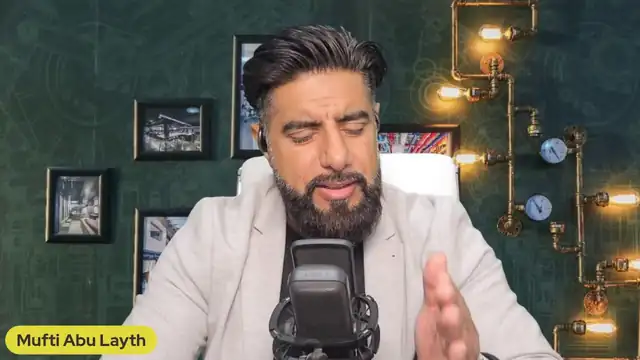 Press play to load from YouTube. Nothing loads until you do.
Transcript
machineauto-transcribed, may contain errors · source: youtube auto · click a time to seek · dotted terms open the glossaryAll right. So, bismillah bismillah. Let me just check. You know, I've got late today. Well, I suppose nothing too new there. Let me just refresh all of this. So, okay.
Just check what's going on. I'm going to do a quick audio and sound check. I'll just let um All right. Okay, I've put the group message out. All right, folks. Those of you just tuning in, you can click like and share. Spread the love. I'm just In fact, if I can just get a uh just a confirmation on the sound that's coming out.
I was And whilst you guys are doing that, let me just Mhm. Just make sure all the online settings Whoo. Right. Okay, so that's done. Bismillah.
Uh All right. So, if you could uh let me just pick someone. Who do I have in the audience? Uh Azhar, right. And Ibn al-Haytham, uh is the audio coming through clearly? I take it. It is. If any issues, just give me just drop a message. All right.
Right, I want to really get straight into today's session, where I want to continue on this this brief series of Islamic psychology and understanding the kind of cosmic cartography. The map that has been drawn out by legends of our Islamic tradition, especially the likes of Sheikh Muhiyuddin ibn Arabi and and others who've been influenced by
him. So, I want to take a look at today the imaginary order, Alam al-Khayal, the gift within. Before we do, let's just take a quick look. Who do we have? Anybody tuned in already? Fahad, you do any you do any. All right. So, Ibn Firnas, shukran shukran.
I could see the confirmation on the sound. And Azhar likewise, Samia al-Imam, shukran. Uh Ain't giving up today. We love you, bro. I'll love you, too. Shukran. Allah keep you blessed. Claire, as always, ahlan wa sahlan wa marhaban.
Right, so let's get straight into into this, the imaginary order. What is this all about? Seriously. Khayal in Arabic, alam al-khayal. Another word You see, when we use this term, al-khayal, what comes to people's mind is imagination.
And that's not a problem. The issue is what is meant by imagination. So, people often think, well, you see, in our day-to-day lives, we understand imagination to mean the not real. Oh, it's just a figment of his or her imagination.
As in something almost dismissive. Unreal. Um, fictitious. Maybe even at times we think of it as delusional. This is not at all what we are addressing tonight. Okay, I want you to And And they may be valid usages of the term imagination in our context today.
But, that's not what imagination is restricted to. So, just put Dismiss and suspend all, you know, prior notions as such of the term imagination. What are we talking about when we speak of al-khayal? Um, you know, from an Islamic psychology perspective. And you can see here, this is just something I just put in there, al-khayal al-khallaq, creative imagination, uh in the thought of Ibn Arabi, and this was by I mean it's translated, but the
work by Henry Corbin. We're continuing with our kind of Venn diagram of how to understand this world. So, the imaginary, the symbolic. Now, the imaginary is uh Al-Khayal, Alam-ul-Khayal. We've tied this in with all with Ibn Arabi's work. This is from Lacanian psychoanalysis, but and the symbolic, which we will tie in with Al-Mithal, Alam-ul-Mithal, and the real with Al-Haqq and the Tajalli.
And those are things to come, but just This is just anchoring in. I've spoken about this previously, so you can um the legend I just of the great masterpiece, the magnus magnum opus of Sheikh Ibn Arabi, the Futuhat Makkiyah, the Meccan Mysteries or the Meccan Opening. Now, as a man thinketh in his heart, so he is.
That I want us to just This is all feeding what we want to explore today. There's a uh this is just a a beautiful quote uh in Arabic, "Bi dakhili hayatun that within me I have a life la alaqataha abadan bi hadhal waqi' al-ka'ib." Which And I'm not saying that is how we have to look at the world, but in this quote that that it has it it no it association with this apparent reality outside, this dimension, which in this particular case is depressing to the individual.
So, this is one of the most powerful uh Hadith Qudsi that we have. It's in Bukhari and Muslim that be and this ties back to the verse we saw in the book of Proverbs that as a man thinketh so he is Allah says I treat my servant or my person as they expect of me.
So if you expect goodness, you find goodness and if badness then so it shall be. Okay. And this is a poem attributed to say Ali with a symbol of a gentleman who is a weak and a gentleman Akbar. That within you you think you are this tiny entity. You know, this is what you portray yourself to be but within you is this huge incalculable world within you.
This gift within. Now that world within comes to us through the imaginary order. And we're going to speak about that. And we'll come back to just so what do we mean when we say the imaginary? To Ibn Arabi, he was really ahead of the curve.
You know, Allah bless him. He You see what if I told you that what if I mentioned to you that the way you perceive this world let's say through your senses that what if imagination is also a perception?
Now you may think well that doesn't make much sense because imagination is in my head. Well, firstly imagination breaking it down it is the image creating part of the human psyche. The image creating modality of the human mind. Okay?
Now, you may say, "Well, look, you know, the visual cortex and the auditory cortex and you know, our sense of movement and touch and proprioception and all these things and the olfactory bulb of smelling and all of this, the senses." But, all of this is being interpreted within your head. The mainstream standard uh model of how we perceive the world through science today, and I'm not saying, you know, whether we agree with this.
I I personally do like the extended mind theory by Dr. Rupert Sheldrake. But, the standard scientific model highlights that everything you are seeing is inside your head. Like, your visual cortex is inside your brain. I mean, it's a part of the brain. So, when you're thinking you're seeing the screen, it's actually your brain conjuring up an image showing it to you.
So, if everything is inside your head as it is, then what's to say imagination is not also perception? So, put that as a as a bullet point. Everybody knows that imagination, human imagination, is at the bedrock of human creativity.
We know that. It all begins with imagination. So, you could put that as another bullet point. Okay. Now, to Ibn Arabi, imagination is not just this, you know, this kind of fantasmatic um operation, where I'm just picturing something unreal.
That may be one of the you know, the the tiny subsets of imagination. Nobody's denying that. I could imagine, you know, this glass is pink. Oh, sorry, this cup is pink. Now, imagining that, that kind of use of the word imagination, sure, that's that's a use of it. Nobody's denying that. That's not what That's not the power of imagination.
That's just a tiny faculty. That's like saying the human intellect The human intellect, think of what what it is capable of. The ideas, the breakthroughs. But it's equally capable of just doing very shallow things. Gossiping, you know, wasting time. It's equally but that's not the hallmark feature of human intellect or human achievement.
So, you know, you could take human beings as an entity and what they what we can achieve. Our accomplishments, and you could say, "Well, sleeping in. This is a human achievement." Or not an achievement, it's something humans do. Sure, but that's not what we're measuring here. So, when we speak of imagination, when Ibn Arabi is speaking of imagination, he's not talking about this, what we what some scholars then call al-khayal uh al-munfasil.
That is detached. Oh, I'm imagining, you know, that car to be like this, or I'm imagining a house to look like this, or I'm imagining this cup to be colored the color pink. This is neither here nor there. To them, imagination al-khayal is a world.
It is a dimension, a space, a phenomenal space, a that that actually exists. Okay. That there is a world to Ibn Arabi. There is a a world that crosses the world of the divine decree, you know, the world of uh spirits and pure meaning, and this world of matter.
There isn't cross in between called alamul khayal or the barzakh, which he often refers to as alamul khayal. That world it is the world of the unconscious mind. It is the world where divine decree is manifesting in different ways.
It is the world of angels. It is the world It is this barzakh, this barrier in between. We are connected to it. We have a kind There is a vortex, if you like, this that connects us straight to that. What is that vortex? That is our unconscious mind, our preconscious mind, and part of our conscious mind through imagination.
And you have things like active imagination where you can you can enter into a state. So, we are Imagine this thing is like a kind of headset we've got on. I mean, it's much more advanced than a headset because it's already part of us. Everything, I want you to understand something.
Most of our entire existence we live inside the realm of imagination. Your past no longer exists, it exists in your imagination. Your future exists in your imagination. You know, the prophet Sallallahu Alaihi Wasallam said, "Al ayyamu thalatha." That the days are three.
That the past, that which has gone and you cannot reach. The future which you do not know whether you will reach. You know, "Yawmu ghadin." "Wa yawmu alladhi anta fi And the now which you are in, so seize it." But the the two-thirds of that are they exist with you in the alamul khayal.
So, the alamul khayal is this barzakh. This dimension which we are still connected to through our unconscious mind. Okay. Now, just to bring this back. So, you can see here um all of this and this is the typical, you know, the iceberg scenario is something Freud popularized with his unconscious mind.
Freud is the one who really has brought us the unconscious mind in contemporary thought. So, you know, we are grateful to him for for for his uh breakthrough. So, this iceberg you can see here, all of these things, beliefs, long-term memories, protective reactions, imagination, controlling assist programming, emotion, I mean, intuition, self-image, these things are all part and parcel of alam al-khayal.
They are all alam al-khayal. Alam al-khayal is more than just the term khayal as fantasmatic thought. You know, just having fantasy thought or imagining things as I was saying, this kind of non-real stuff. That's just one sub-branch of alam al-khayal of imagination with a capital I. Or as Corbin, Henry Corbin, listed, the imaginal realm.
He calls it that just to distinguish it from the word imagination cuz just so people don't keep confusing it. All right, because we're used to imagination. So, you can see here all of these things. And that is um this is by Chittick, but Imaginal Worlds, Ibn Arabi and the problem of religious diversity. I just uh thought I'd give a reference to that.
The imaginal is not the imaginary. It's more real than And this is Henry Corbin than the physical world. It is not subjective. And he's saying this in reference to the works of Sheikh Muhiyuddin Ibn Arabi. Between God and man is is the realm of angels. Angels are an intermediate being. It is exactly this that has been lost in modernity. This is the work of Henry Corbin.
Now, you have verses in the Quran. This comes on um a few occasions, the word barzakh uh this particular verse from Surah Rahman that marajal bahraini yaltaqiyan that the two seas or oceans of existence are colliding.
Baynahuma barzakhun la yabghiyan. Between them is a barzakh. This imaginal world. La yabghiyan. They cannot completely submerge into one another. This barzakh is a barrier between the world of divine decree the alamul arwah, the world of pure spirits and this this world of material, you know, this
that is dense of matter. And we already know that matter when you get right down to it disappears. It's an illusion, you know, matter molecules, atoms, we already covered this. 99% not there. There's nothing to them as you, you know, 99.9 not just 99. Right, so and you see imagination being used in the Quran that you have from Surah Saffat uh you have verse 65 where Allah is describing
shajaratuz this tree of the of the pits of hell. Shajaratuz zaqqum fi asli jahim in that is in the foundations of utter annihilation and and doom, you know, damnation of hell.
But then Allah says "Thil'uha." Sorry, "Tal'uha." That it's the way this tree manifests. Ka'annahu ru'usu its manifestation, its appearance, its apparition. Ka'annahu ru'usu shayatin. Verse 65.
It is as though it is the heads of demons, of shayatin. Now, here's an extract from Tafsir al-Tabari. You can see that imagine that the heads of demons are not something that we actually know anything about. None of us have actually seen a demon.
So, you know, why has Allah mentioned the heads of demons in Surah Saffat, that the tree resembles or it it appears as though it is the heads of demons. And the reason it appears like that is so you can use your imagination to picture that.
And you'll see in the tafasir, here's an extract from Imam Tabari, but others too, they will highlight that issue. Ibn Ashur and others highlighted it as well. That this is it's allowing for that creativity. Otherwise, the Hadith, which is in uh Bukhari and Muslim, from Abu Hurayrah, this look, Allah says Hadith Qudsi that the afterlife is something ma la aynun ra'at wa la udhunun sami'at wa la khatara ala balib bashar aw qalbi bashar.
And wa la ya'lamuhum malakun muqarrab wa la when I yell at them Malak Makara when I never muscle nobody not an angel not a prophet no human being can ever conceive what the afterlife is actually like. So when Allah is speaking about the um uh about the tree in the afterlife resembling the heads of demons.
W- although we've never ever one with nobody has seen the afterlife and can never conceive it and neither have do we have any true realization of what demons what what what do demons look like? But this is a it allows for human imagination to unfold. So this is one example of where the Quran is leaning in on human imagination allowing us to to just unfold in in thought.
Here's a fascinating beautiful um you know some couplets by the um mystic saint uh Abdul Karim Jili a a huge devotee of Ibn Arabi in the generations that followed him and really built on his work but a famous poem of his Allah in the wood router below Mahali that to picture beingness without the impossible is but the hell on fear hell on fear hell on.
Allah when I yell at them in the hell on hacking that there are no and the person who is truly awakened this reality is the people of hack. My Rahman and home fee cooling heart that they are in the presence of God. That's how And he that their level of being awake because this world is often it is given as a metaphor for being asleep and you will see all of this that I'm saying about imagination, you'll see
how this ties in with your actual world. and practical ramifications for this and implications. We'll see that. This will tie in. And people who are seen as more conscious are described in our tradition as more awake. Yakada. This kind of that that
that this but the first line is the one that is so popular Allah in the wujud that to picture beingness without trying to without there being the impossible cuz beingness just cannot emerge. So and and there's these things that seem disparate, spread out, scattered, but they all tie in and I'll bring them in in a moment.
This is imagination. It is the ability of the mind to build mental scenes, objects, or events that do not exist or not present or have happened in the past. That this is something we all have the capacity to do. And this was something I saw that I thought oh, I'm not saying this is how it is, but I thought I'd share it. That you have the sensory world, which is this world.
You have the world of pure divine decree, the world of ru of consciousness, pure consciousness, and the intersection in the middle, which is deemed the imaginal world or alam al-khayal. And this is a quote once again by Henry Corbin from his mundus imaginalis, which is another word for what he calls the imaginal world, the world in between or the imaginary.
If we usually speak of the imaginary as the unreal, the utopian, this must contain the symptom of something. In contrast to this something, we may examine briefly together the order of reality that I designate as mundus imaginalis or imaginalis. That this is what Corbin is referring to. Even And he's speaking about Ibn Arabi's works here, by the way.
But he's saying he gives it this term. And this just to show. Now, note that this is once again going back to Freud's um you know, symbolism of the unconscious mind being the iceberg, that most of it is underwater. Note that the ego is also deeply rooted in that. Although we are aware of it in this world, but it is rooted in alam al-khayal.
In this world of khayal. Because when Ibn Arabi is referring to you see, Ibn Arabi's khayal is Ibn Arabi's khayal is is all of that. It is the past, it is the future, it is the unconscious mind, it is the preconscious mind, it is the fantasmatic, it is beliefs, it is all of the all of that is in our imagination.
It is in alam al-khayal. This kind of ether, this imaginal ether, this dimension that we are connected to, that's where all of that exists. Our fears exist there. Our hopes, our aspirations, our dreams, it is all part of Alam al-Khayal. Which is connected which is to Ibn Arabi Alam al-Khayal, another word for it is the barzakh.
The barrier is Alam al-Khayal. The world where the the you want you know so all of that is the connected world, the unconscious mind going to Ibn Arabi. When people have passed away, that barzakh is that Alam al-Khayal. It is all one dimension. And he sees it separate to the afterlife as in the pure akhirah is a distinct dimension.
This barzakh is more connected still. I mean it is not entirely people who have passed away are no longer in this you know matter world, but they are in the barzakh which is still connected. It's like in between this and the akhirah to come. It is not heaven, hell, etc. It is not that. It is a barzakh.
Hayat al-barzakhiyah, they call it. That barzakh, the barrier is the same thing as Alam al-Khayal in Ibn Arabi's terminology. Okay, so I'm just I'm clarifying that so we are which is the same as one saying which is connected to the unconscious mind, which is connected to the dream world.
When we dream from a modern scientific worldview, uh from a psychological one, it is the unconscious mind that becomes active. The conscious one is switched off. In Ibn Arabi's definitions that we have access to that Alam al-Khayal, that Barzakh, that the Ruh, the unconscious is the Ruh.
You have access and you see things in that world. This is a photograph from a lecture I attended a few years ago. So, this um this dream space-time or dream space um in the mid-20th centuries, you had a few physicists like a Dr.
Broad, you had Dr. Price in in the photograph there, and you had some others who hypothesized if about phenomenal spaces or hyper spaces. Cuz that's what this Alam al-Khayal it is, it is a hyper space. A hyper dimension. It exists. Now, they spoke about this uh in physics and presented papers that there is a dimension which they called the psychical ether.
So, I know Dr. Broad in 1953 and in the '50s you also had Dr. Price who you've got a little photograph of there who spoke about dream space, that these are actual places distinct to physical space. But, these are actual dimensions. So, physicists and I'll tell you Dr. Bernard Carr uh continues to speak about that quite a few lectures and I attended his like In fact, that photograph was taken from one of his lectures.
And he um was junior to and worked alongside uh Stephen Hawkings as well. So, and here is a Hadith from um you you've got this This particular one is in the Musnad Ahmad, but it has others in Sahih al-Bukhari and Muslim as well that la ilaha that the Prophet alayhi wasallam la ilaha in the way of Allah il Allah il Allah il Allah il Allah.
So the Prophet is saying that the world of revelation that revelation has stopped. That there is no Nabi ever after the Prophet no prophet after him and has stopped except in the glad tidings. So the companion said what are the glad tidings? What are these glad tidings? And the Prophet said Allah il Allah il Allah il Allah il Allah il Allah il Allah.
The Prophet said good dreams that continue. So in dreams you still have access to that world which is which is the world from where revelation came. Now you have access to that world but you don't understand it always. So the Prophet said in the Hadith that Prophet Prophet has ended. There will never be a prophet after the Prophet but he said but carries on as good dreams that are shown to people or people select good people of Allah see them sometimes.
So and this Hadith this particular one is from Aisha and here's another one. This one is in Bukhari that you see from Abu Hurairah that the Prophet said that in the way of Allah il Allah il Allah il Allah il Allah. Prophet said that there is nothing from that has been left except except except the glad tidings and they said and what is what are these glad tidings?
And the Prophet said Allah il Allah il Allah il Allah. That you still see these dreams. And here is another one once again from the Hadith um, Bukhari and Muslim right, that who and this is once again, uh, an enigmatic uh, hadith where you've got from Abu Hurairah that the Prophet Sallallahu Alaihi Wasallam said that seeing a dream, that when you have access to that world, a positive dream, a ru'ya saliha, it is a portion from 46th portions of
prophethood, of nubuwwah. So, one portion, juz'un, means sittatun wa arba'una juz'an minan nubuwwah. One from of 46 portions of prophethood. Now, that does not mean that there are any prophets. The Prophet clearly said there are no prophets after the Prophet Sallallahu Alaihi Wasallam, and it's utterly, uh, unacceptable in Islam, this notion that some people have brought.
What the Prophet Sallallahu Alaihi Wasallam is saying, what does nubuwwah mean? Nubuwwah means access to the unseen. That's what nabi is, you know, an man yatanaffa, okay, who has man lahu, uh, ilmul ghaib aw al-akhbar anil ghaib. That, you know, ghaib ki khabrein dene wala, somebody who gives you reports about the unseen.
This is what the Arabic nubuwwah means. And the Prophet said one portion of 146th portion remains through dreams, positive dreams, of this unseen you have access to, this unconscious that we are connected to. And there you have commentaries, and um, it's fascinating on a side note. I know some people said, "Well, because six months of the Prophets, um, revelation were dreams." If you remember the famous narration Bukhari, but you do have the al-Mazari really
knocking that and quoting Ibn Battal and Khattabi saying Imam Nawawi said uh sittat ashhur because the the riwaya in Bukhari doesn't really say that. That's just an interpretation. But I thought, you know, that's interesting for some of the researchers amongst us to look into that if they wanted to.
Now, so right now bringing this back, how does this help us? So, Ibn Arabi has highlighted for us that all of our world that we are seeing, it is within alam al-khayal. This hyper space, khayal hyper space that we have, that we are connected to through this vortex, subconsciously, unconsciously, we are always connected to that barzakh, to that barrier,
to that world, the imaginal world, the mundus imaginalis, the alam al-khayal. How does this impact us in our daily world? Well, we can see, especially recently, this has become a whole, you know, a phenomenon. I want us to think about visualization.
All right. The power of visualization that you see something so vividly in your mind's eye that it happens and Allah makes it a reality. You see your success. And I'm And And a way to understand this, you could see look visual a useful technique that helps you reach your goals and live your dreams.
It works by getting your mind and body ready for what you want to happen. Just like exercise, the more you do it, the stronger it becomes. Because what what is happening is the as you are using this detached imagination, you know, the fictitious one or the phantasmic one, where you are picturing something, you start anchoring that into belief.
Because belief is also part of alam al-khayal. It is that world. It is not a tangible, you know, where is belief? Belief is not in this cup. It is not something out there. Belief, it is part of that mundus imaginalis or the hyperspace of uh alam al-khayal as Ibn Arabi would say.
It is connected to that world. So, what you are doing is you are visualizing. You are seeing something. And you could use this for dunya, din, dunya, wa akhirah. If a person visualized that, you know, I've attained this this dream house, this dream car. And I'm not saying this is what our goals need to be.
But if a person used it for this and they're using it for this all the time, they make it real in alam al-khayal. They picture it. They visualize it. They taste it, smell it. They see the intricacies. If it's a door Like if it's a house, they see the doors, the windows. They they picture themselves inside it, they see it they expand and zoom in with resolution, high quality to the extent that this as it ties in it starts connecting and being anchored to their
subconscious and unconscious mind. The unconscious mind, people, is connected it is that connected to the Alam al-Khayal, the Barzakh. And as something gets planted in that It's like you're putting this whether you want to picture it as putting it out there or putting it way within in within this vortex that is connected.
However, you want to picture it. As you do it it reshapes. You see because what Ibn Arabi has explained is that in Alam al-Khayal our risk Allah is things are happening. Risk is being written, it is being defined, it is manifesting.
Angels are at work. You take let's say the way Alam al-Khayal would work is it works in symbols, it works in code, it's not like this world. So as So in the Hadith you have that the prophet said that I saw in a dream I was giving milk to a companion and I understood milk to mean knowledge.
Milk in this world does not mean knowledge. But in that Alam al-Khayal, in that moment it manifested to mean that. That was the coding, that was the symbol. So similarly what is this world it is like a manifestation almost like a holographic manifestation if you like, although it is matter of that world.
So, as a risk, let's say your risk is increasing today over there. Let's say risk is being written for you. As it's being written, it's manifesting here as a new job, as a payment coming through, as an opportunity. Over there, it's being written in its symbols. It's not how it is here.
So, as we have access to that world, we are connected with the ruah, with the unconscious. So, when people use these visualizing techniques, what they're doing is they're anchoring something so deep into that. They're putting it into in the terms of, you know, physicists like Broad and Price using the term like psychical ether or that hyper space.
That as they're putting it into that ether, it's appearing the moment it's appearing in alam al-khayal, it's manifesting here. You see, because they're deeply connected. So, you see people are everyday this and they're not Muslims that are using this. They just realized, "Oh, this actually works." But the people who spoke about all of this, who highlighted how this, you know, that the metaphysics of all of this and um the pioneers to this were
people like Sheikh Ibn Arabi, who highlighted that alam al-khayal is what we are connected to. And it begins with khayal here. That yes, you might use it as something, you know, whimsical and just, you know, just useless. You might think, well, oh, it just but it has immense powers that create your results, you know, with the power of visualization.
Now, we see so many adverts like this, you know, everywhere. That people have harnessed this. So, part of what I was trying to explain today is that alam al-khayal is this entire world, this hyper space that we are connected to through this modality of imagination, the image creating modality we have within the brain.
We are connected to it. It's some kind of a vortex. It's some kind of a something, but it is connected. This includes it's not just using the word imagination, khayal, to me imagination, how we use it today, something that is not real. That's a tiny subset. It's using it to mean memories, it's using it to mean creativity, it's using it to mean the unconscious mind, the preconscious mind, the past which we hold in with us, the future, our ego, our identity.
It's held in the imaginary uh hyper space. That's where it exists. You know, who are you? Your story, your aspirations, your goals. All of this is alam al-khayal. And you can see that by harnessing that because we remain connected with this. And we have, you see, what happens is when our conscious mind is active, we have access to a khayal, to a kind of imagination, but we when we are awake we're disconnected
from our unconscious mind. We're disconnected um by volition, as we're not in control. It's still there at the bottom of the iceberg. But we we don't have control over. Sometimes we might do something unconsciously. You know, the moment the conscious mind gets distracted, the unconscious mind does something. You know, oh, I was trying to pick this up. You know, I put I don't know.
I I I want to throw something in the rubbish and I put it in the dishwasher by accident. You the you you're not You get distracted, you go on to autopilot, the unconscious mind takes over. The unconscious mind is connected to the world of dreams. It is the world of dreams.
It is also connected with we have in that realm, we have some connection with each other. You know, how are we connected? The ruah has some connection. The hadith says al arwah junudum mujannadah. You'll see uh the well-known case studies of things like that the mother will suddenly know if the child is in danger.
This is like documented way above probability in quantitative research. So, but we just don't know how they how that happens. It happens because the arwah are connected. And all this kind of hyperspace is what Ibn Arabi is calling alam al-khayal.
He's calling all of that space, this connection between the ruah, this where you carry your story, your past, your future, your memories, your experiences, you all of this he's calling this whole hyperspace Alam al Khayal. When we dream, what we see there, how these dreams have access that Alam al Khayal, it is a realm in which, remember, divine decree is manifesting.
The judgments of Allah are coming to, you know, to fruition. Risk is increasing. It may be decreasing. You know, good things may be happening. Things But though in that world, things are happening by symbols. It's not like this world. And we see that in dreams sometimes. We don't understand them fully. What does that dream mean?
Or we understand it to mean something else. And that that is in the Hadith, that world, this world of dreams, remains a portion of access to the Raib from Allah. Except we can't sometimes decipher. We don't fully understand what we've seen, what we've witnessed.
But then harnessing that power in this world by things like change by visualizing. You see your success. You picture it. You see yourself sitting there having achieved it. You're holding it. You're embracing it. You're smelling it.
You're You're You're You're feeling it. You're tasting it. You're everything. The co- colors, the vivid reality to it. And as you're doing that, this is getting You see, it's getting anchored into that subconscious, into the deep unconscious into the Alam al-Khayal. And the moment it gets in there, it's as if the moment it appears there, it manifests here again in its reality.
You see, this is how people And And remember the story we have of ourselves is also in this hyperspace that Ibn Arabi is calling Alam al-Khayal. And you have this as well today, that you know, this whole thing of people will speak of the laws of attraction, affirmations, I am something, I am positive, I am successful. It changes their life.
It clearly does. It works. These people have figured this out. It works. Why does it work? Because you are tapping into that hyperspace of Alam al-Khayal. I am positive, I am happy, I am successful, I am wealthy, I am healthy. You're saying these things to a point that it you're pushing them into the unconscious.
And as you push them, things that can appear in that world will manifest in this world. Now, you could say, "Well, how does this thing work? Well, what is the the the the kind of mechanical causality of it? I I can't see, you know, by me saying this, picturing this, believing this, Allah, how you know, and we saw the Hadith, Allah says, "Ana inda dhanni abdi bi." As a man thinketh, so he is.
That as you have that conviction, Allah makes it happen. That is the Hadith in Bukhari and Muslim. But one could say, "Oh, but I can't see the connection. You know, I was doing that and I got a new job contract. I was doing that and a payment came through. I was doing that and I found another job. But what is the connection?
I don't see the physical, you know, the the the mechanical uh causation here." But that's because in this world it's manifesting like that. But in that hyper space of khayal in that alam al-khayal things work differently. And it is Sheikh ibn Arabi who really, you know, let me Allah bless his works and bless his afterlife and bless us to really truly grasp
uh the gems of this tradition. And to utilize them in you know, in improving our lives. Cuz these things work and the shocking thing is that nowadays even people who don't believe in Allah that have figured out this power and how to harness it have changed their lives by doing it.
And we've had this in our tradition from the get-go. You know, so yeah, I really wanted to share that. This goes back to See, this all begins with this What is this thing that in this insan that Allah has created? That he's not just a he appears as just a species, this animal, this beast amongst many beasts on this earth.
And Allah so beautifully highlights that to us in the verse where he says that insan is created mean thing from clay from this earth we created insan. So you can see that bestial, the animality, the the the kind of crudeness, the kind of Then Allah says when I
And then we breathed into him our spirit. Our ruah. Allah says he breathed his ruah, that's the verse of the Quran, into insan. So yes, and that so beautifully captures insan that insan is you know, yes and and this is the famous hadith, you know, in Bukhari and Muslim, Allah created man in his form.
No, and this is not anthropomorphism in the sense that Allah has, you know, he's a human-like figure, not at all, but that Allah created man in his form to be a manifestation of his tajalliyat, of, you know, the divine expressions of Allah's names on earth.
That we manifest the names of Allah on his earth. So and in one part of understanding that is the power we have in this world through the imagination. It is not just something whimsical and flimsy and oh, just used to oh, it is the the source of all creativity on earth.
Is the human imagination. Allah has gifted each and every one of us with this immense gift. The gift of imagination, this hyperspace, this vortex, this access we have to this world that contains all of these things, that alters our reality if we believe it.
The power of belief. Where does the power of belief lie? It lies in that hyperspace or Ibn Arabi calls alam al-khayal. So, really in understanding this, I I wanted to share that that we Allah has given us an immense gift, a power, a superpower that every insan has.
But because it's so, you know, hidden in plain sight, we we ignore it and belittle it. It is the power of imagination. Alam al-khayal, this hyperspace of khayal. And and we think we take it in this day and age it's seen as nothing. So, yeah.
Now, right, I wanted to share that. This is taking a look at alam al-khayal. Then there is alam al-mithal which Ibn Arabi also calls he he he uses the term for alam al-khayal sometimes the hyperspace as the world of symbols, alam al-mithal, which I mirror these with um the Lacanian Borromean knot that you have there between the imaginary, symbolic, and the real, the alam al khayal, alam al mithal, and al haqq.
Uh and we'll take all of these in an individual session, and I'll cover the symbolic. The symbolic is slightly All of these are connected, and they're the same kind of thing, but they're distinct in the sense the imaginary is more to do with the individual. The symbolic is it's like part of that Venn diagram. It's connect It is that hyperspace, but it's also the one where not just your, but it's more to do with the social as well, where the social reality is nested and anchored.
So, language is also nested in the symbolic, culture, laws, rules, anything social that exceeds an individual to the multiplicity becomes that realm of the symbolic hyperspace. That is that dimension of the khayal world that is not just about you, it is about a species that we operate, we're connected.
Language is a perfect example, psychosocial entities, realities, all of concepts, all of those things are nested in the symbolic realm. So, we'll touch upon that in another session, but today's was more on the individual. The hyperspace of khayal, alam al khayal. Okay, I hope that's been of some help.
There's any questions, I'll take a look, otherwise we'll wrap that up. Uh how is alam al khayal distinct from al ghayb? It is access, that is part of the ghayb. That is where the ghayb is manifesting in that world to do with us. So, the One could say there is more to the raib than just that. If the raib means anything the part of that is closed off to us, then obviously Allah and all, you know, ultimately everything to do with God and the world of pure meaning and the world of pure consciousness, pure ruah
before all of those things are all the raib as well if you if you're using it in a binary. But anything to do with us if this world is like a hologram, there is a base, this kind of barrier from which the bulk is appearing. That barrier is the alamul khayal or alamul misal. It is that barzakh in which anything to do with us, that raib all manifests there.
Now, do we have access to that raib? Well, we have some access. But as the hadith mentions in dreams. In the unconscious mind, we have some access, but we don't sometimes understand it. Intuition is another form of access to that world. That raib. You get intuition sometimes.
You just know to do something. You don't know why you know it. So it's the you know, the pilot in us is this world. The pilot in us sometimes can be a hindrance because the autopilot sometimes knows more, but it just can't explain to you. Cuz the ruah, the unconscious knows that sometimes.
And sometimes you can see it, and sometimes you can connect them deeper through things like visualization, through these affirmations, through this manifesting. You can do that. Because you're trying to connect them. You know, you're trying to anchor it deeper and deeper into your um so So, this question, the that is the as far as that world is the for this world.
But, I I suppose just means the unseen and one could say well, there's much more to the unseen. Allah is the unseen. Allah is not stuck in is more to do with us. is a world of symbols and coding and so, it's not how things have to be how we understand them. Like the famous hadith I mentioned of uh the prophet seeing milk.
Or you're seeing a bad dream, but it means a good thing. So, in fact, there's a beautiful hadith that the prophet said that if you see a dream and it startles you, always see the positivity in the dream. Take a positive The prophet said, take a positive uh um like a decoding and interpretation from that dream and you will see the positivity manifest.
And this is how the prophet through his you know, just his divine and infinite wisdom would would teach people and guide them. You know, people would come to the prophet and they'd have these startling dreams. And the prophet would always tell them such a beautiful breathtaking, inspiring uh interpretation that they just could not see that.
And they would be so pleased. And they would see then goodness happening. Because these things are connected. You know, this thing of manifestation, it happens then. And And what In fact, there's a famous Hadith where this woman would often come to the prophet
when she's had some kind of a a startling She thought it's a nightmare, and she would come to the prophet Sallallahu alayhi wasallam and she'd say, "Oh my god, I've seen this." And the prophet would He He would give her such a beautiful, inspiring interpretation of what she just saw. And she'd be like, "Whoa. I I didn't even think that." Like, I mean, this isn't but as an example, imagine a person saw something breaking down, collapsing, death.
But they're like, "Well, that is the death of your miseries. That is the death of all the failures, the breaking down of everything holding you back in life. That was the collapse of your weaknesses. Of your unaccomplished past.
What emerges from here is your success. You see, the world that world in a quantum sense, you know, with quantum measurements and observation, it often is tied in with when and how we measure it. And it's only when and how we measure it that the, you know, the wave function of the the dream wave function collapses.
So, the prophet Sallallahu alayhi wasallam would always do that. And there's a famous Hadith, this woman would come, and you know, this one time she saw this dream, and it was something I think it was something to do with death or something of her husband and she was really startled and she came. And the prophet wasn't home. Sallallahu alaihi wasallam and Aisha was there and she told Aisha and Aisha said to her like in the city, oh my God, that's terrible.
You know, that she and she said she said something very similar to what the person thought they saw as in you know, her husband had died or something. She said, oh my God, that's terrible, you know, he's going to die or something like this. So what happens is it's a very famous Hadith. The prophet comes home and usually the prophet in a lot of the Hadith when he would come home, he would ask that oh, how are things and sometimes he would say, oh, did anybody come, you know, did we have any were there any visitors, any guests and so the prophet says, did did anybody, you know, were there any visitors?
And she and Aisha says, no, no, she says, oh, that lady came and the prophet knows because she always used to come just for dreams. And the prophet, you know, in the Hadith he's they they say that is his color drops because she would always come for startling scary dreams.
And she wouldn't I'm not saying she would come every day, but whenever she came upon occasion, it was because of So the prophet he said, what did she come for? Was it a dream? And Aisha says, yeah, she had some nightmare. And they say the prophet's color dropped and he said he said, what did she say?
And and Aisha says, she said it's something I think to do with death of her husband or something. And the prophet said, what did you say? And she said, oh, I said that's terrible, you know, that means you know, like she she interpret she said like what the person saw what which was some scary something to do with death as in, "Oh my god, that means the person's going to die or something." And they say the prophet was so hurt.
And he said, "Never say that." He said, "Never say that." He said, "If a person comes to you with a dream, always he said, "either be silent or find some positivity in that and tell that to them because it is the moment he said that when they say it, when you express the interpretation that they've come for, he said it that when you say it waqa'a he said it is as if it is on the wings of a bird.
And when you say it waqa'a and waqa'a in Arabic can mean it falls and it can mean it occurs. The same thing itha waqa'atil waqi'ah. That the person either themselves or as many people when they come to you, they're looking for some understanding.
Allah may have chosen you at whose hands that dream wave function collapses and the interpretation that you say manifests. So, always either you say you know the hadith that say something good or be silent, observe silence.
You don't know, you say, "I don't know." You know, these things don't make any sense to me. Or you always see a positivity in it. Because that it is something to do with symbols. You know, some But they said somebody said to me, you know, once they said they saw a dream that they had this mad illness.
And I could tell the person was startled by this. I said I said, you know what? That's beautiful in the sense that illnesses in Islam are the whole means a purification. Perhaps you are about to go through such a purification that is to cleanse you of all weights and things holding you back in life. And the person just I saw this smile light their face.
And maybe that is how it is going how it is decreed to be. You don't know, I don't know. But you see the prophet, what did he say? What was the nabuwwa thing that the the the unseen khabar? It was the positive, ru'ya saliha. It was the positivity was what was of the unseen, not the negativity, not a sayyi'a, not al-mufsida, a saliha.
It's as if the positivity was there all along. You know the Schrödinger equation, this whole thing. It was there all along. You see, it's in superpositions. It's everything and it's nothing. It's everywhere and it's nowhere. The moment you measure it, calculate it, interpret it, waqa.
The hadith says. It happens. It falls. Meaning that it could be that it occurs or it could be a fall or slip-up. You see, because that's what it is. Either walk out in walk out. So, Allah has given us all this gift within.
We all hold it. This light shines within us all. You know, some of us we just blind to our own light. May Allah bless us all. Seriously. Um yeah, I I thought let's inshallah, I want to share that. I'll wrap this up. It's been quite quite a day, I must say.
Allah bless you all. It's as always an absolute pleasure catching up with you guys. Um if you do want to reach out to me, uh as always, you can reach out on Instagram if it's straightforward, simple questions. Uh if it's something more complex, or you want a one-to-one uh session, then you can head over to patreon.com/malm, and you can make a booking.
You can subscribe to the Patreon. It's uh tier two allows you to make one-to-one uh sessions. And also, you have access to our Discord group, where we do actually you know, we do have regular, frequent live uh sessions there, as well. Other than that, people, I pray for you all. Allah bless you all. May, you know, you Allah
shower you with such abundance that your light it shines so bright. Amen. Seriously. Sometimes I think we, you know, amidst the rubble of life, we get so we just forget that yes, there is this sunshine outside, but what we carry within it is so powerful.
We just forget it. That's all. Allah bless you all. Eid al-Adha is around the corner and the days of Hajj are upon us. May Allah accept the Hajj of all who have gone. May he those who were not fortunate grant them the rewards and blessings of a Hajj. May you know uh anyone who is suffering worldwide Allah ease their suffering.
May Allah grant success and relief um victory to the people of Gaza. Amen. And anybody suffering displaced worldwide may Allah bless us with positivity. May allow us to manifest all the abundance, the risk the blessings, the success in this world.
You know, speaking of dreams I had a It was It was a strange beautiful dream where I actually saw my mom recently and I hadn't seen her since she'd passed. It was really it was a a strange one, you know. It was one where she was preparing to go to Hajj. And it was also one which allowed and she you know, she was still being so helpful to me and yeah, and but in it it's it's strange.
It's like we all knew that she was going to pass. And it also gave me it's amazing what dreams do like in it she she was still trying to take care of me and I said that you don't need to care of me. You should you know, just focus on you and you're going on Hajj and and she said, "I know I'll always do that, take care of you to what I can." But we we all knew like in it I knew she knew that after the Hajj she would pass away.
But I then embraced her and she kind of embraced me and we cried and like very emotionally in a very closure sense and it's amazing what dreams allow a person to do in terms of closure. You know, that's this this whole part of that hyperspace of Alam al-Khayal.
Wow, Allah bless you all. Yeah. So do remember me in your kind of Assalamualaikum wa rahmatullahi wa barakatuh.
Something wrong here?
Tell us what is wrong and it will be checked against the recording. Nothing changes until a person has reviewed it.
Sending a note needs JavaScript, which is off or unavailable in this browser. Nothing has been sent.
No name, email address or account is asked for or stored, and the inbox does not store your IP address. For rate limiting it keeps an unreadable fingerprint of your connection for 48 hours, and our database provider's own logs record connections as every website's do. Only your note, its kind, the page and the moment in the recording are kept, for review.
Cite this recording
Stable id, transcript version and tier are part of the citation. Every change to a transcript is logged.Mufti Abu Layth Archive, auto-transcribed, may contain errors. https://muftiabulayth.org/r/-oe48henoye/ (accessed 1 November 2026)
- APA 7
Mufti Abu Layth. (2024, June 13). The Gift Within - Ibn Araby | عالم الخيال The Imaginary Order | Islamic Psychology | Mufti Abu Layth [Video, auto-transcribed, may contain errors]. Mufti Abu Layth Archive. Retrieved November 1, 2026, from https://muftiabulayth.org/r/-oe48henoye/
- Chicago author-date
Mufti Abu Layth. 2024. "The Gift Within - Ibn Araby | عالم الخيال The Imaginary Order | Islamic Psychology | Mufti Abu Layth." Video, auto-transcribed, may contain errors. Mufti Abu Layth Archive. Recorded June 13, 2024. Accessed November 1, 2026. https://muftiabulayth.org/r/-oe48henoye/
- BibTeX
@misc{abulayth-OE48HEnoyE,
  author = {Mufti Abu Layth},
  title = {{The Gift Within - Ibn Araby | عالم الخيال The Imaginary Order | Islamic Psychology | Mufti Abu Layth}},
  year = {2024},
  month = {6},
  date = {2024-06-13},
  howpublished = {\url{https://muftiabulayth.org/r/-oe48henoye/}},
  url = {https://muftiabulayth.org/r/-oe48henoye/},
  organization = {Mufti Abu Layth Archive},
  urldate = {2026-11-01},
  note = {Auto-transcribed, may contain errors}
}